All Episodes

Displaying 1 - 20 of 25 in total

S2 #8

Your Broker Has 18 Months | The Week Finance Changed

In the age of AI, stock trading is still writing cheques. That changed this week.On March 9, 2026, Nasdaq partnered with crypto exchange Kraken to build the Equities Transformation Gateway — tokenized equities trading 24/7, settling in seconds, instant, fractional, and always on. Four days earlier, NYSE's parent Intercontinental Exchange invested in OKX at a $25 billion valuation with the same intent.Two of the most powerful financial exchanges on earth. Same week. Same bet. That is not a trend. That is a verdict.In this episode, Aman breaks down:→ Why the stock market is the last analogue institution in a   digital world→ Why the ASX's $250M blockchain project failed in 2022 — and   why Nasdaq's approach won't repeat it→ How this is structurally different from Robinhood fractional   shares→ Why Kraken's Federal Reserve master account changes everything→ Stablecoins, the GENIUS Act, and the hidden infrastructure   layer beneath it all→ Three things to watch before mid-2027 — and why financial   journalists are missing the bigger storyThis is a solo episode. Co-host Zubin Vandrevala is in New Zealand. He couldn't wait.━━━━━━━━━━━━━━━━━━━━━━━📖 COMPANION BLOGA Man Who Blogs #32 — Chains, Clocks & Capital[SUBSTACK URL]━━━━━━━━━━━━━━━━━━━━━━━━━━━━━━━━━━━━━━━━━━━━━━━━━━━━━━━━━━━━━━━━━━━━━━━━━━━━━━━━━━━━━━━━━━━━
S2 #7

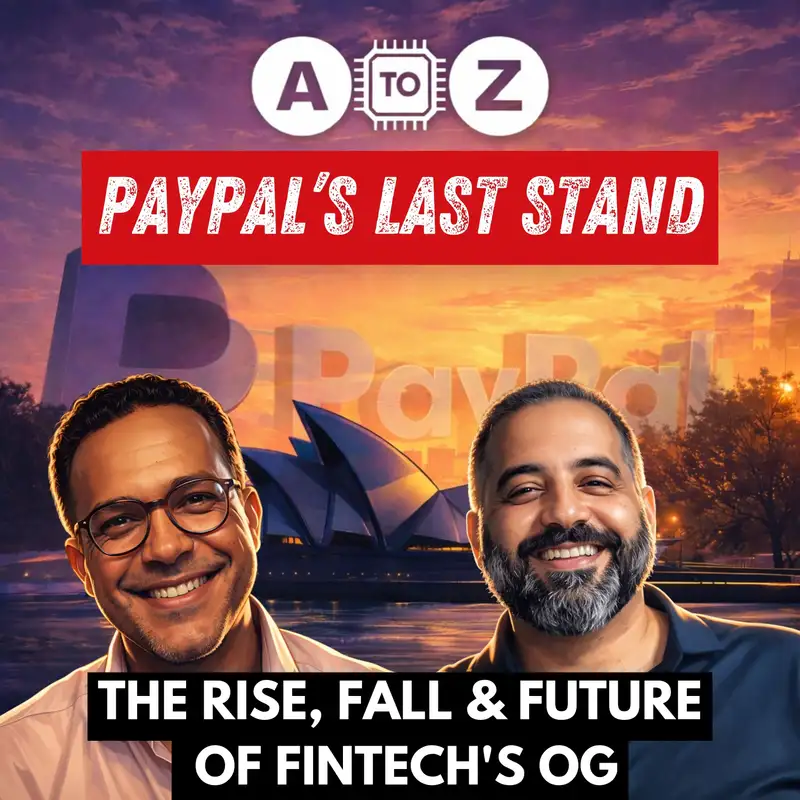
PayPal's Last Stand: The Rise, The Coup & The $300 Billion Fall of Fintech's OG

In September 2000, Elon Musk boarded a plane for his honeymoon. By the time he landed in Sydney, he was no longer CEO. His co-founders, Peter Thiel and Max Levchin, had staged a midnight coup, scrapped his everything-app vision, killed the X.com brand, and reborn the company as PayPal.Twenty-five years later, that company has gone from a $360 billion peak to a $65 billion acquisition target. And Elon still owns X.com.In this episode, Aman Narain and Zubin Vandrevala perform a full autopsy on fintech's most important company, tracing PayPal from its PayPal Mafia origins through five failed CEOs, a $300 billion collapse, and three possible futures.What You Will LearnThe Honeymoon Coup — how PayPal was born on betrayal in a Palo Alto boardroomThe Golden Cage — how the eBay acquisition killed PayPal's killer instinctProf Z's Three Eras: Trust Layer, Aggregator Era, and the Commodity TrapThe CEO Parade — five personalities who could not escape the brand's gravityThe Interface War — how Apple Pay and Shopify made PayPal invisibleThree Endgame Scenarios — Stripe acquisition, JPMorgan buyout, or Elon's RevengeEpisode Timestamps00:00 — Cold Open: The Honeymoon Coup04:30 — Zubin's new CCO role at Gr4vy and travel check-in08:00 — The PayPal Mafia Genesis and the X Factor16:00 — The eBay Era: The Golden Cage23:00 — Prof Z's Segment: The Three Eras of PayPal32:00 — The CEO Parade and the Card Scheme Paradox38:00 — The Endgame: Three Scenarios for PayPal's Future45:00 — The Mic Drop: The Training Wheels EffectKey Concepts DiscussedThe Commodity Trap — when solving trust too well makes you irrelevantThe Interface War — why hardware (Apple/Google) beat software (PayPal)The Merchant OS — how Shopify and Adyen built closed-loop ecosystemsThe Accountant CEO — when boards stop hiring builders and hire operatorsFrequently Asked QuestionsWhy is PayPal declining?PayPal is losing the interface war to Apple Pay and Google Pay, which use biometric authentication to remove PayPal's friction advantage. At the merchant layer, Stripe and Adyen offer superior developer APIs and auth rates. PayPal's core moat, digital trust, has become a commodity handled by device hardware, not a standalone service.Who might acquire PayPal in 2025 or 2026?Three scenarios are most discussed. First, Stripe — the Collison brothers want PayPal's 400 million consumer accounts to complement their developer-first merchant stack. Second, JPMorgan and Jamie Dimon could acquire PayPal's consumer base in a single transaction. Third, Elon Musk, who still owns X.com and needs PayPal's regulatory licences across 200 jurisdictions to execute his everything-app vision.What is the PayPal Mafia?The PayPal Mafia refers to the founding team of PayPal, including Peter Thiel, Elon Musk, Reid Hoffman, Max Levchin, and David Sacks, who went on to found or fund LinkedIn, Palantir, YouTube, Tesla, SpaceX, Yelp, and OpenAI. They are considered the founding generation of modern Silicon Valley.What happened to X.com?X.com was Elon Musk's vision for a global financial super-app. After a boardroom coup in 2000, the company was rebranded as PayPal. Musk reacquired the X.com domain from PayPal in 2017 and later rebranded Twitter as X in 2023, partly reviving his original ambition for an everything-app.What is the Commodity Trap in payments?The Commodity Trap describes how PayPal's greatest achievement, making digital payments feel safe, ultimately destroyed its competitive advantage. Once consumers universally trusted digital payments, the trust layer became commoditised and handled by device biometrics. PayPal no longer owned the thing it had spent twenty years building.About the HostsAman Narain is the Founder of A2Z Advisors with 25+ years of experience across Google, HSBC, Standard Chartered, Schroders, and BankBazaar.Zubin Vandrevala is the Chief Commercial Officer of Gr4vy and a former payments executive with experience across Visa, Citi, and global financial institutions.Related EpisodesThe Last Family Portrait: Schroders, Nuveen and the Death of Mid-Sized Active Management10 Bold Predictions for Fintech in 2026Listen and SubscribeRSS Feed: This episode: All episodes: Connect With A2Z FintechLinkedIn: A2Z Fintech PodcastSubstack: A Man Who Blogs by Aman NarainYouTube: A2Z FintechDisclaimer: This podcast is for educational and entertainment purposes only. Nothing discussed constitutes financial, legal or investment advice.
S2 #6

The Last Family Portrait: Schroders, Nuveen & the Death of Mid-Sized Active Management | £9.9bn Deal Autopsy

The Schroder family survived Napoleon, two World Wars, the fall of merchant banking, and the rise of passive investing. On February 12, 2026, they said "cash me out" — agreeing to sell their 222-year-old firm to Nuveen (TIAA) for £9.9 billion. The Financial Times called it "the defining deal of a glass half-empty UK." Philip Augar, who worked at Schroders in the 1990s and wrote The Death of Gentlemanly Capitalism, says history is repeating itself — just as the City's merchant banks fell to Wall Street in the 1990s, active fund management at scale is becoming a US-dominated industry. John Gapper calls it the end of the City's émigré alchemy — the era when German-born banking families drove London's financial growth. In this Quick Dive, Aman Narain and Manu George — both former Schroders insiders — perform an autopsy on one of the last great family-controlled financial dynasties. They trace the firm through four CEOs (Bischoff, Dobson, Harrison, Oldfield), examine why the wealth management and alternatives pivots fell short, and ask the question the entire industry is avoiding: Is this the end of the mid-sized active asset manager? KEY TOPICS: The Schroders-Nuveen deal: £9.9bn, 34% premium, Q4 2026 close 222 years of family control: from Napoleonic-era merchant banking to algorithmic allocation Four CEO eras: The Transformer, The Architect, The Great Hope, The Accountant Bruno Schroder's Christmas party and the painting that said everything London's "Wimbledon effect": hosting the game but no longer owning the players The Death of Gentlemanly Capitalism, Part II: from merchant banks to asset managers The passive revolution: how BlackRock, Vanguard, and State Street reshaped the landscape Why no auction? Oldfield didn't shop the company and Evelyn Partners got 50% more on EV/EBITDA Why Schroders' wealth and alternatives pivots were too late The last family-controlled financial dynasties: Rothschild, Lazard, Lombard Odier, Pictet Nuveen and TIAA: the quiet $2.5 trillion empire The triple threat: index-tracking, private markets, and AI The "Telco Trap" for active managers What happens to talent, culture, and clients in the next 18 months DEAL FACTS: Deal value: £9.9bn (~$12.8bn) — valued at 16x forecast earnings vs 12.3x for European peers Cash offer: 590p/share + up to 22p permitted dividends Premium: 34% to last close; 61% to 12-month VWAP Analyst consensus target pre-deal: just £4.50/share Schroder family payout: ~£4.06bn (41% stake) Combined AUM: ~$2.5 trillion Expected close: Q4 2026 THE FT'S VERDICT: Lex: "Ending its listed life with a whimper rather than a bang." Philip Augar: "Wrenching but inevitable... just another brick in the wall." John Gapper: "The end of the City's émigré alchemy." GUEST: Manu George — 25-year asset management veteran, former Senior Investment Director at Schroders (2007–2020), currently Credit Strategist at Polen Capital. HOST: Aman Narain — Founder, A2Z Advisors | Co-Host, A2Z Fintech Podcast | 25+ years across Google, HSBC, Standard Chartered, Schroders, BankBazaar. CONNECT: 🔗 A2Z Fintech on YouTube: https://www.a2zfintech.com/🔗 A Man Who Blogs (Substack): https://amanwhoblogs.substack.com/🔗 Aman on LinkedIn: https://www.linkedin.com/in/amannarain/🔗 Manu on LinkedIn: https://www.linkedin.com/in/manu-george-invmgmt/#Schroders #Nuveen #TIAA #AssetManagement #ActiveManagement #PassiveInvesting #FintechPodcast #WealthManagement #MergersAndAcquisitions #PrivateMarkets #CityOfLondon #FinancialDynasty #WimbledonEffect #DeathOfGentlemanlyCapitalism #A2ZFintech #LondonFinance #AIinFinance🎧 LISTEN & SUBSCRIBE:📡 RSS:
S2 #5

Healthy Money: How to Build a "Moat of Convenience" in Modern Banking

Ever wondered if banks are just giant dodos stuck in legacy land, or could they actually get hip and healthy? Well, Alastair Campbell is here to dish out the secrets of making money healthy again, minus the boring behind-the-scenes. Buckle up, it’s a juicy ride through data, archetypes, and the ultimate goal: banks that actually get you.In this episode:Why 63% of industry value growth is flowing outside incumbentsRethinking archetypes: digital natives, modern families, and the kid pocket money revolutionThe three core levers of banking transformation: Customers, Architecture, and LeadershipHow to build a bank for the modern, complex, multi-hyphenated lives of today’s consumersThe importance of 'stealing with pride' — reusable tech and collaborative ethosWhy 'boring' banks are losing and what's needed to become trusted custodians of your financial lifeLeadership lessons: owning your architecture, generating customer relevance, and setting the ‘more for less’ standardTimestamps:00:00 - Welcome to the revolution: making money healthy again02:37 - The data behind outside growth: non-incumbents stealing the show04:05 - Why the balance sheet isn’t the hero anymore06:18 - Digital wallets and multi-banking: the new normal10:20 - The three wheels of banking transformation12:17 - Leadership’s role in fixing the broken banking model16:01 - Archetypes derailed: from nuclear families to digital natives20:10 - How banks can innovate for weak signals, not just the average customer24:00 - Money = emotions: making banking less boring, more human28:39 - The future of customer data: credentials, relationships, and habits32:39 - Building a modular tech stack for true customer-centricity34:40 - The moat of convenience vs the moat of inconvenience36:47 - Regulator’s role: pushing, pulling, and shaping the future of finance44:23 - From wire protocols to open banking: standards that unleash innovation46:23 - Why leadership tenure matters in successful transformation54:22 - Empathy at the core: how young professionals can think differently55:02 - Leading with purpose: ownership, career paths, and authentic leadershipResources & Links:Healthy Money: How Modern Banks Can Create Value and TrustThought Machine - Modern core banking softwareRevolut - Digital banking pioneer for the next generationStandard Chartered - Former employer for both host and guest Singtel - Singapore's leading Telco where Alastair led Strategy NatWest - Leading UK Bank where Alastair was Head of StrategyAlastair CampbellRichard KibbleConnect with Alastair:LinkedInWant to overhaul your bank into a modern money machine? This convo is packed with the nuts and bolts of making that happen fast, smart, and with a lot less snooze factor. Buckle up, bankers — it’s time to get healthy!### Links & Resources   ### Credits & Guests  ### Chapters 
S2 #4

NuBank’s US License: The Purple Revolution Arrives

The US banking fortress just got a new neighbor. NuBank—the Latin American titan with 127M+ customers—has officially announced its US National Bank License.In this minisode, Aman and Zubin break down why this isn't just another fintech launch. We explore the "Wayne-dependent" reality of US regional banks stuck on 1980s COBOL code and why NuBank’s $1 cost-to-serve makes them a lethal competitor to the "Hollow Middle" of American finance.Highlights include:The COBOL Crisis: Why US regional banks are being held hostage by 40-year-old software.Hard Mode Mastery: How NuBank conquered Brazil and why that makes the US market look like "Easy Mode."Focus vs. Breadth: Why NuBank is succeeding where Revolut is still fighting for regulatory ground.The Death of the Legacy Tax: What a cloud-native "siege engine" means for your wallet.Chapters: 00:00 The Hook: COBOL vs. The Purple Glow 01:30 The Backstory: Fighting "Hard Mode" in Brazil 04:30 The US Map: Mega-Banks vs. Hollow Regionals 07:00 Secret Sauce: Why NuBank is different from Revolut 09:30 Aman’s Mic Drop: The End of the Legacy Tax, NuBank US License, NuBank Expansion 2026, A2Z Fintech, David Velez, Cristina Junqueira, National Bank Charter, JPMorgan vs NuBank, Revolut US License, Chime vs NuBank, Jamie Dimon, Fintech Disruption 2026, Legacy Banking, COBOL programming bank, Cloud Native Banking, Cost to Serve Fintech, Core Banking Transformation, Digital Transformation Banking, Fintech Singapore, Fintech Brazil, US Banking Crisis, Neobanks USA
S2 #1

CES 2026: Top 10 Gadgets & The Physical AI Era (S02 E01)

Welcome back to Season 2 of A to Z Fintech! Aman and Zubin are back from the holidays, but their brains are still in Vegas. This isn't just a gadget review; it’s a look at the "Re-Materialization" of technology.We are moving from a decade of "software eating the world" to "AI moving the world." From Nvidia’s shift into the laws of physics with Project Cosmos to the "Bot-naissance" of humanoid robotics, we break down the three mega-trends redefining hardware.Plus, we review the Top 10 pieces of tech from CES 2026, including shape-shifting phones, stair-climbing vacuums, and the lollipop that vibrates music into your jawbone.In this episode, we cover:The Macro View: Why Nvidia is no longer just a chip company.The Shift: How Chinese manufacturers (Roborock, XREAL) flipped the script from "Factory" to "Innovator."The Top 10: Foldables, rollables, wearables, and the ultimate smart fridge.Featured Gadgets:Samsung Galaxy Z TriFold & Lenovo Rollable: When hardware adapts to your workflow.XREAL "Project Aura": The death of the physical monitor?Withings Body Scan 2: The $600 "Health-is-Wealth" station.Lego Smart Bricks: Screen-free magic for the next generation.2026 Bespoke AI Family Hub: The fridge acting as your kitchen’s CFO.Roborock Saros Rover: The vacuum that finally learned to climb stairs.Uber/Lucid Robotaxi: The "Passenger-as-Guest" economy.German Bionic Exia: "Physical AI" you can wear.Samsung Micro RGB TV: 130 inches of digital art.HP EliteBoard G1a: The PC inside a keyboard.Timestamps:(00:00) Cold Open: The CES Fever Dream(00:45) Season 2 Kickoff & Banter(03:00) The "Don't Sell Your 401(k)" Disclaimer(04:00) Trend 1: Nvidia & The Era of Physical AI(06:15) Trend 2: The Bot-naissance (Robots get legs)(08:00) Trend 3: China’s "Front-of-House" Flip(10:00) Gadget Review: The Shape-Shifters(12:00) AR Breakthroughs: XREAL(14:00) Health Tech: Withings Body Scan(16:00) Future of Play: Lego Smart Bricks(18:00) The AI Supply Chain Fridge(20:00) Robotics: Roborock Saros(22:00) Autonomous Living: The Lucid Robotaxi(24:00) Wearable AI: Exoskeletons(26:00) The 130-inch Window: Samsung Micro RGB(28:00) The Wacky: Hologram Waifus & Musical Lollipops(29:00) The Mic Drop: The Re-Materialization of Tech
S1 #15

Neobanks 2.0: Challengers to Cornerstones

In this episode, Zubin and Aman explore the transformative journey of Neobanks, tracing their evolution from early models to the current Neobank 2.0 era. They discuss the historical context of banking, the rise of digital finance, and the emergence of the Neobank Mag7, a group of successful neobanks that have mastered profitability and customer acquisition. The conversation delves into the Neobank flywheel strategy, the impact of AI, regulatory changes, and the shift towards embedded banking. They conclude with a framework for future-proofing banks, emphasizing the importance of efficiency and adaptability in the rapidly changing financial landscape.TakeawaysNeobanks are redefining the consumer relationship in finance.The evolution of banking can be divided into three mega eras.Neobanks initially struggled with weak unit economics.The Neobank Mag7 represents successful digital banking models.AI provides a structural advantage for neobanks over traditional banks.Embedded banking is transforming how financial services are delivered.The 6P OS framework is essential for future-proofing banks.Efficiency and adaptability are crucial for survival in banking.Regulatory changes are fostering competition in the financial sector.The battle between neobanks and traditional banks is far from over.Chapters00:00 The Rise of Neobanks 2.002:41 A Brief History of Banking06:48 The Evolution of Neobanks10:14 The Neobank Mag7: Champions of the Digital Era14:11 The Neobank Flywheel: A New Approach to Banking17:35 Disruption Forces in Neobanking21:21 The Emergence of Embedded Banking24:06 The 6P OS Framework for Future-Proofing Banks29:36 Conclusion: The Future of Banking
S1 #7

Banking on AI

Aman and Zubin reveal how AI is revolutionizing banking, moving far beyond simple chatbots to a total system overhaul. They track AI's journey from its "Good Old-Fashioned" roots to today's powerful Generative and Agentic AI, and even gaze into the future of Superintelligence!🚧 The 3 Traps Holding Banks Back:Discover the "Three Legacy Traps" hindering AI adoption in banking: outdated business models, clunky old tech infrastructure, and a mindset stuck in the past. It's not just about tech, it's about trust!🚀 4 Ways AI is Reshaping Finance NOW:Learn about the game-changing applications of AI in:Fraud Detection & SecurityOperational EfficiencyHyper-Personalized Customer ExperiencesNext-Gen Lending & Capital🧠 What is MCP? (The Secret Sauce of Scalable AI)Zubin breaks down the "Model Context Protocol" (MCP) – the foundational standard making secure, scalable AI integrations in banking possible. Think of it as the universal language allowing AI brains to seamlessly interact with all their tools.📈 Who's Winning the AI Race in Banking?Find out what forward-thinking banks are doing right: bold vision, transforming entire domains, looking to the future, and building robust AI "scaffolding."💥 The Tectonic Shift:This isn't just an update; it's a fundamental rewrite. Banking is moving from traditional "Palaces of Profitability" to dynamic "Protocols of Intelligence," where trust is currency and non-linear thinking wins.🔥 QUOTE OF THE EPISODE:"Culture eats co-pilots for breakfast, and no one has even served lunch to governance yet."🎧 Tune in and discover how AI is truly rewiring the future of money!
S1 #6

The Hidden World of Interchange Fees

In this episode, Aman Narain and Zubin Vandrevala explore significant shifts in finance and technology, focusing on the hidden world of interchange fees. They discuss the escalating AI talent wars, the frenzy in fintech public markets, and the ongoing consolidation in the UK banking sector. The conversation delves into the history and mechanics of interchange fees, highlighting macro trends that could reshape the payment landscape, including the rise of fintechs, Capital One's acquisition of Discover, and the emergence of stablecoins. The hosts conclude with insights on the future of payments and the concept of 'new interchange' that could redefine commerce.You can find the book Zubin mentioned, "A Piece of the Action: How the Middle Class Joined the Money Class," on Amazon at https://a.co/d/bt5MEbuTakeawaysAI talent wars are intensifying, with companies offering massive signing bonuses.Fintech companies are preparing for public market entries, signaling a vibrant sector.UK bank consolidations are increasing, with major players acquiring smaller banks.Interchange fees have a rich history dating back to ancient trade practices.Understanding interchange mechanics is crucial for grasping the payment ecosystem.The Durbin Amendment has created a loophole benefiting smaller banks and fintechs.Capital One's acquisition of Discover transforms its role in the payment landscape.Stablecoins could disrupt traditional interchange revenue models.The future of payments may involve a shift from transaction fees to data monetization.New interchange models could revolutionize how commerce operates.
Previous Page

Displaying 1 - 20 of 25 in total

Next Page