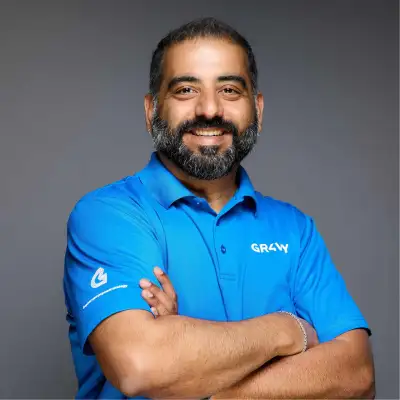
Zubin Vandrevala Host

Zubin Vandrevala

A2Z Fintech by Night. Spearheading revenue growth at Gr4vy by Day.

Appears in 34 Episodes

S2 #25

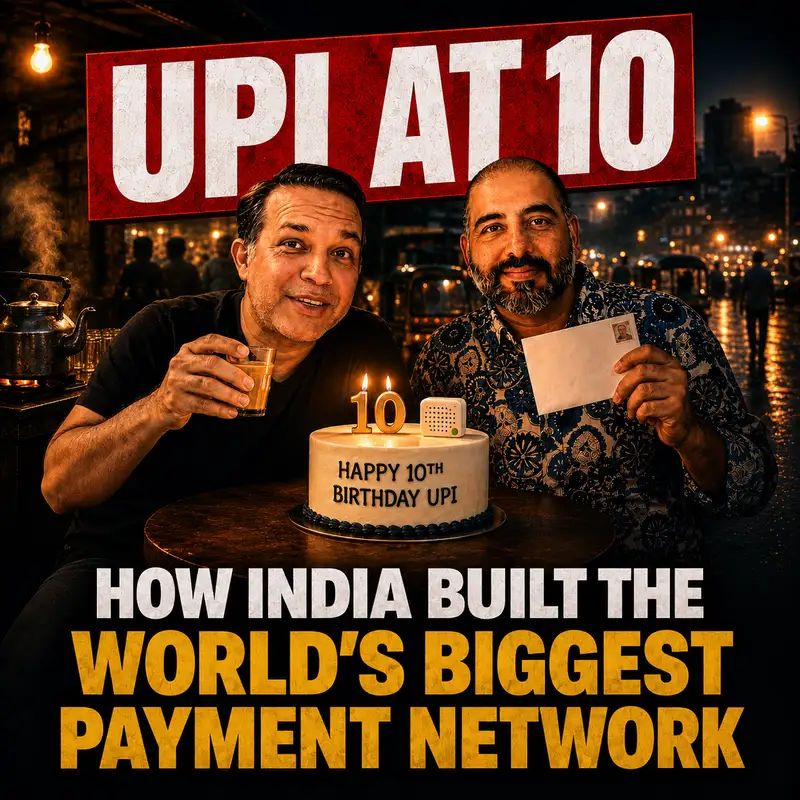
UPI at 10: The World's Biggest Payment Network Isn't a Company

UPI cleared 373 transactions in its first month in 2016. In July 2026 it cleared 23.66 billion in a single month, worth close to 30 lakh crore rupees. Ten years on, the most consequential payments network of the decade turns out not to be a company at all. On 25 August 2016 the Unified Payments Interface went live in Indian app stores, four months after a Mumbai pilot with 21 banks. The architecture was deliberate: a regulator, a non-profit switch, volunteer architects who insisted the centre stay dumb, and private apps free to fight each other on top. The twist is what that fight produced. Google Pay held 62% of UPI volume in 2018 and has since fallen to around 35%, beaten not by a better product but by a field army of QR stands and soundboxes. Aman Narain and Zubin Vandrevala break down how UPI went from 373 transactions to 241 billion a year, why the app that won the ground war now carries the largest regulatory overhang in consumer fintech, and who actually pays for a payment rail that charges merchants nothing. Both were inside Google Pay during the Tez years, so this is an operator's account rather than an anniversary brochure. Key takeaways: 1. UPI cleared 241 billion transactions in FY26 against roughly two crore in FY17, a twelve-thousand-fold increase in ten years. 2. Google built the better app and PhonePe built the better army; on open rails the army took the crown. 3. NPCI's 30% per-app cap, mandated in 2020 and deferred ever since, makes Google Pay's decline and PhonePe's success the same regulatory problem seen from opposite ends. 4. India chose a free rail funded by public subsidy; Brazil chose a priced rail at 22 to 23 basis points that funds its own servers. 5. UPI carries 85% of India's retail digital payments and 49% of global real-time volume, on infrastructure no company owns. Topics covered: - The India Stack: Aadhaar, payments, data, and the KYC cost that fell from about twenty-three dollars to ten cents - Why abstracting real time, not inventing it, was UPI's actual innovation - Three fights nobody remembers: USSD against IP, banks against third-party apps, SMS OTPs against device binding - How the baton survived a change of government, from the UPA to the NDA - Demonetisation as fire starter rather than cause - Inside Tez: scratch cards, ultrasonic pairing, and a multinational betting on rails it did not own - PhonePe's ground war, and why the last metre in India is physical - The 30% cap, the sovereignty subtext, and the crown that eats - Seven hundred million QR codes in a country that never installed nine million card terminals - Brazil's Pix: the tidier system, and what India's messier bet bought instead Referenced in this episode: UPI pilot, Mumbai, 11 April 2016; public launch 25 August 2016; NPCI incorporated December 2008; IMPS, November 2010; iSPIRT, February 2013; demonetisation, November 2016; PhonePe founded December 2015; RBI action on Paytm Payments Bank, January 2024; NPCI's 30% per-app volume cap; zero MDR since 2020; NPCI International and the acceptance corridors; BIS Project Nexus; Brazil's Pix, November 2020; World Bank on Indian financial inclusion; the 1930 cybercrime helpline. Related episodes: S2E10 on Mastercard and BVNK; S2E20 on the PayPal board fight; The Stablecoin Endgame Nobody's Talking About. Hosted by: Aman Narain writes at amanwhoblogs.substack.com. Zubin Vandrevala is your payments provocateur, filing from a city that still posts cheques. Enjoying A2Z Fintech? Leave a rating and review on Apple Podcasts. It is the single biggest signal to the Apple algorithm and how new listeners in our world find us. For information and entertainment only. Not financial advice. Chapters: Transcript:
S2 #24

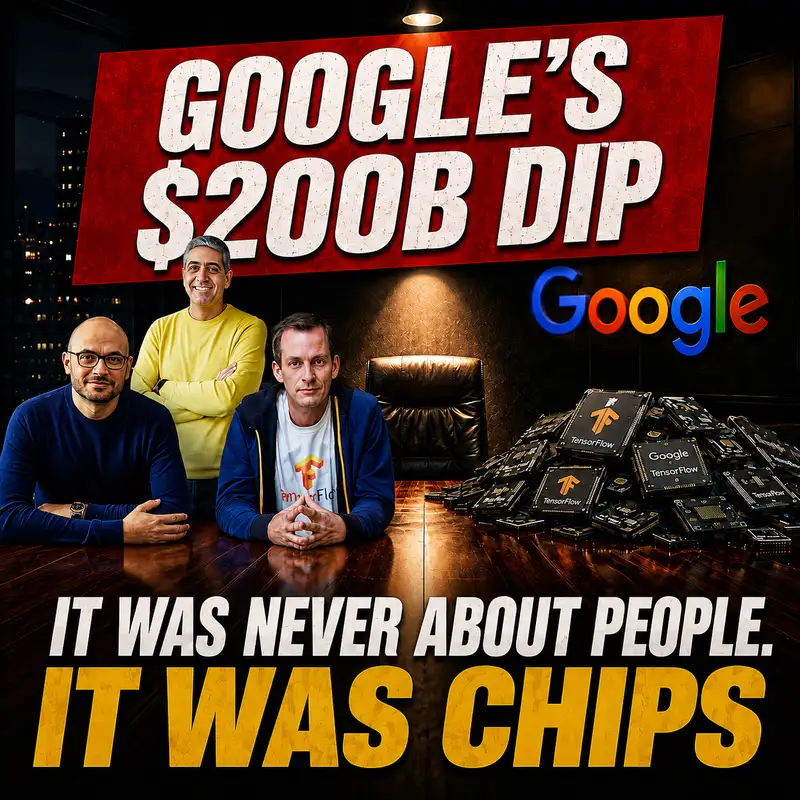
The Truth About Google's Brain Drain: It's Not About People, It's About Chips

Alphabet lost roughly $200 billion of market value in the eleven days after 5 August, close to a full year of its own AI infrastructure budget. On 14 August, a filing showed Berkshire Hathaway holding $37.8 billion of the same stock. On 5 August, Google DeepMind announced that Demis Hassabis would step back from day to day management to become Chair of Google DeepMind and Chief Scientist of Alphabet. Koray Kavukcuoglu took over as senior vice president reporting to Sundar Pichai. The same morning, chief scientist Jeff Dean left after 27 years, taking Sanjay Ghemawat, Oriol Vinyals and Quoc Le with him to found Discovery Loop. Alphabet is a founding investor and cloud partner in the company its own researchers left to build. Aman Narain and Zubin Vandrevala break down why the Google DeepMind reshuffle was not a talent story at all. It was an argument over TPU allocation between Google DeepMind's researchers and Google Cloud's enterprise arm, and it was settled in Cloud's favour. Key takeaways: 1. The reshuffle was not a talent crisis. It was a compute allocation decision, settled in Google Cloud's favour. 2. Berkshire's $37.8 billion Alphabet position was built during the second quarter and only disclosed on 14 August. It is not a dip purchase. 3. Sergey Brin holds no operating title at Alphabet and shaped the outcome anyway. 4. Google DeepMind's independence, protected since the 2014 acquisition, ended at an all-hands on 6 August. 5. The $200 billion that came off Alphabet's market value is roughly a full year of its own AI infrastructure budget. Topics covered: - What actually moved between 5 and 16 August, and what else was moving in the same window - Berkshire's 13F, the $10 billion private placement, and why the timing matters - Sergey Brin's April town hall and the limits of a co-founder with no operating title - Why Google Cloud's leadership wanted Koray Kavukcuoglu in the seat - The all-hands that moved non-technical teams into corporate Google - Gemini 3.5 Pro, two months late, and the Flash release that arrived instead - Jeff Dean's 4,400 people and Discovery Loop's reported $10 billion ask - Why Alphabet is bankrolling the company its own legends left to build Chapters: Referenced in this episode: Alphabet leadership announcement, 5 August 2026; Google DeepMind all-hands, 6 August 2026; Reuters exclusive on the executive moves, 12 August 2026; Gemini 3.7 Flash release, 13 August 2026; Berkshire Hathaway Q2 2026 13F, filed 14 August 2026; Alphabet's $80 billion equity raise, 1 June 2026; Alphabet 2026 capex guidance of $195bn to $205bn. Related episodes: Google I/O 2026: Sundar Pichai's 25-Year AI Long Game; SpaceX, Anthropic, OpenAI: The $2tn IPO Boom; S2E20 The PayPal Deal. Hosted by: Aman Narain writes at amanwhoblogs.substack.com. Zubin Vandrevala is your payments provocateur. Enjoying A2Z Fintech? Leave a rating and review on Apple Podcasts. It is the single biggest signal to the Apple algorithm and how new listeners in our world find us. For information and entertainment only. Not financial advice. Transcript:
S2 #23

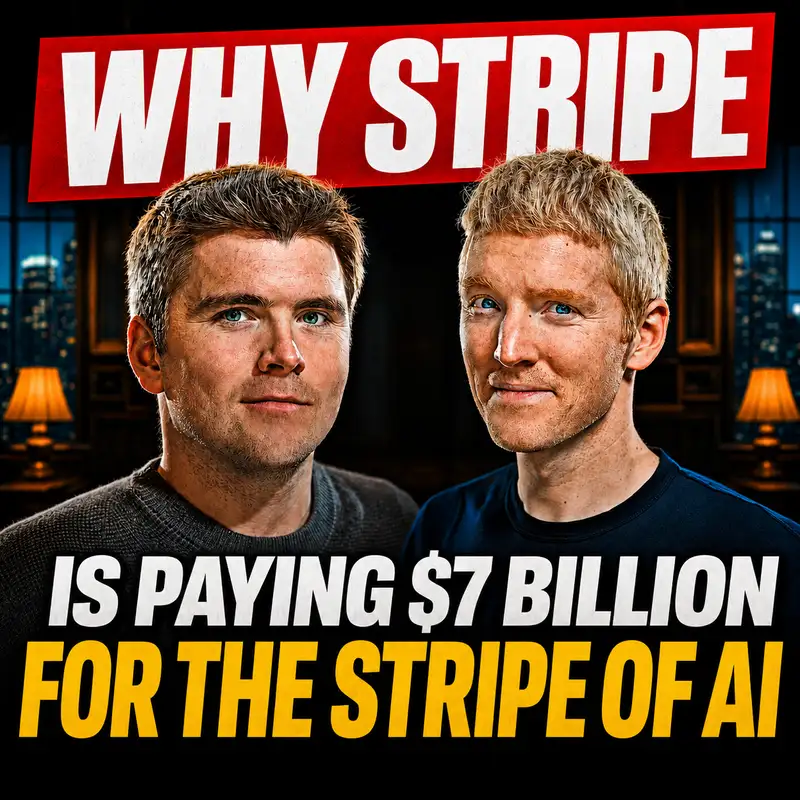
Stripe's Shopping Spree: OpenRouter, PayPal and the $50 Billion Tell

Stripe has agreed to pay more than $7 billion for OpenRouter, a company valued at $1.3 billion in May. In the same season it has bid $60.50 a share, roughly $53 billion, for PayPal. The Collison brothers own a publishing house, and they have stopped collecting books. Over the weekend Bloomberg reported that Stripe had finalised an agreement to acquire OpenRouter, an AI routing layer founded in 2023 that sits in front of more than 400 models. In May the company was valued at $1.3 billion. Stripe reportedly paid more than five times that, months later. Its own founders had described it as the Stripe of AI. The twist is what sits beside it: an unresolved $53 billion bid for PayPal, the company Stripe was founded in 2010 to correct. Aman Narain and Zubin Vandrevala break down what every Stripe acquisition since 2020 has in common, why a Stripe IPO is the most plausible explanation for $50 billion of committed bank financing, and why none of it could have happened to a listed company. Key takeaways: 1. Stripe has not been buying revenue since 2020. Paystack bought emerging-market rails, TaxJar and Recko bought the revenue and tax stack, Bridge bought money movement, Privy bought wallets, and OpenRouter buys the routing layer. 2. More than $7 billion for a company valued at $1.3 billion in May buys the toll booth between software and the models it transacts through, not eight million users. 3. Staying private is what made the sequence possible: no shareholder vote, no proxy circus, no analyst asking about dilution on a call that never happens. 4. The $50 billion of committed bank financing behind the PayPal bid, plus a $17 billion equity cheque from Stripe, Advent and Block, is the tell. Lenders ask how they get repaid, and private equity funds run on a clock. 5. On this read a Stripe IPO is not the epilogue to the shopping spree. It is the financing plan, and at reported valuations it would beat Aramco's $29 billion record. Topics covered: - Auctomatic, Limerick and the $5 million sale that started it, with Patrick Collison at nineteen - A decade of write, don't buy: why the early acquisitions were footnotes - The shelf since 2020: Paystack, TaxJar, Recko, Lemon Squeezy, Bridge, Privy - What OpenRouter actually is, and why 400-plus models behind one door is a toll booth - The PayPal bid at $60.50 a share, the board's refusal, and the higher price now under negotiation - $3.7 trillion of annual processing and 439 million accounts under one roof - Why the most valuable private company in fintech has stayed private for sixteen years - The $50 billion of committed financing, and what lenders and Advent both need next Chapters: Referenced in this episode: Bloomberg on the OpenRouter agreement; OpenRouter's May valuation of $1.3 billion; the Stripe and Advent International offer of $60.50 a share for PayPal; Wall Street Journal reporting on a higher price under negotiation; Reuters on roughly $50 billion of committed bank financing and a $17 billion equity cheque from Stripe, Advent and Block; Auctomatic, Paystack, TaxJar, Recko, Lemon Squeezy, Bridge and Privy; Stripe's $159 billion February tender and secondary marks nearer $200 billion; Saudi Aramco's $29 billion IPO record. Related episodes: S2E20, the PayPal board's refusal of the $53 billion bid; S2E17, the $2 trillion IPO boom; and our February episode on the three PayPal endings. Hosted by: Aman Narain writes at amanwhoblogs.substack.com. Zubin Vandrevala is your payments provocateur. Enjoying A2Z Fintech? Leave a rating and review on Apple Podcasts. It is the single biggest signal to the Apple algorithm and how new listeners in our world find us. For information and entertainment only. Not financial advice. Transcript:
S2 #22

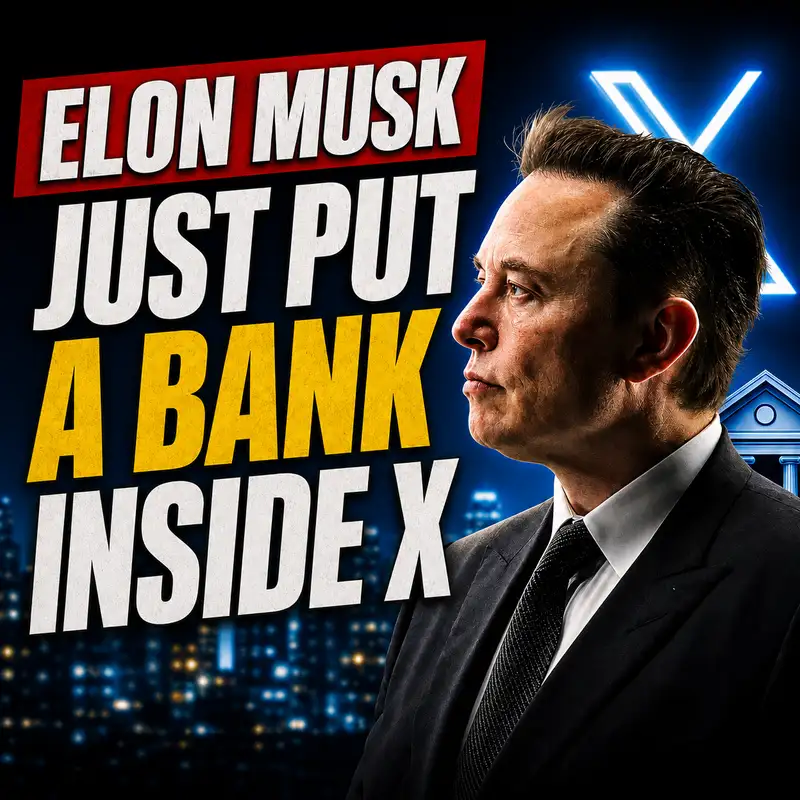
The $1,600 Problem with Elon Musk's X Money's 6% Rate

What if a new banking product offered you a staggering 6% interest on cash deposits and 3% cash back on spending? Sounds too good to be true, right? In this episode of A2Z Fintech, join hosts Aman Narain and Zubin Vandrevala as they dive deep into the launch of X Money, the latest banking venture from Elon Musk's company, X. This fintech podcast unpacks the implications of such an attractive offer and questions whether X Money is a genuine banking service or merely a strategic maneuver to keep users engaged within the expansive X ecosystem.  The hosts provide a fintech analysis of the model behind X Money, emphasizing that this account is not a traditional bank account but rather a marketing strategy aimed at user retention. As they explore the risks associated with X Money, they highlight critical issues like control over user accounts and the potential for account suspension based on social media activity. This episode is packed with startup insights and discussions on the regulatory landscape, making it essential listening for anyone interested in the future of payments and financial technology.  Throughout the episode, Aman and Zubin draw on their extensive experience in the payments industry to shed light on the historical context of Musk's ventures in finance. They also discuss how X Money fits into the broader trends of fintech and digital banking, touching on topics like stablecoins, blockchain technology, and the competitive landscape featuring giants like Visa, Mastercard, and PayPal. What does this mean for the future of banking? How will it affect user engagement and retention in a rapidly evolving fintech space? Tune in to get their market predictions and insights on this innovative offering.  As you listen, you'll gain a clearer understanding of the motivations behind X Money's offerings and what they signify for the financial innovation landscape. Whether you're a fintech leadership enthusiast or just curious about how big tech is reshaping finance, this episode has something for you. Don't miss out on this opportunity to demystify complex finance topics and gain valuable insights into the future of fintech. Join us for an engaging discussion that promises to challenge your perceptions and spark new ideas. Click play and discover what X Money could mean for you! Chapters: Referenced in this episode: X Money launch, week of 26 July 2026, United States, invite only, X Premium subscribers only; Cross River Bank, New Jersey, and two FDIC enforcement actions in 2018 and 2023; Senator Elizabeth Warren's April 2026 letter to Elon Musk; X Payments money transmitter licences across 41 states, excluding New York and Massachusetts; the Synapse collapse of 2024; Block, Cash App and Sutton Bank; Meta's Libra and Google's Plex; X.com founded 1999 and merged with PayPal; Musk removed as chief executive in September 2000; eBay's $1.5bn acquisition of PayPal and Musk's $175m exit; the X.com domain repurchased in 2017; Twitter acquired for $44bn and renamed X. Related episodes: S2E20 — The PayPal Deal: Why the Board is Ignoring the $53B Price Tag; S2E18 — The Stablecoin Endgame Nobody's Talking About; S2E10 — Mastercard's $1.8B Power Move: Why They Outbid Coinbase for BVNK. Hosted by: Aman Narain writes at amanwhoblogs.substack.com. Zubin Vandrevala is your payments provocateur. Enjoying A2Z Fintech? Leave a rating and review on Apple Podcasts. It is the single biggest signal to the Apple algorithm and how new listeners in our world find us. For information and entertainment only. Not financial advice. Transcript:
S2 #21

S2E21 — Trump Accounts: The Good, The Bad and The Non Obvious

Trump Accounts give every American child born between 2025 and 2028 a $1,000 investment account, seeded by the US Treasury. Left alone it grows to about $250,000; filled to the $5,000 annual limit every year it reaches $13 million, and the distance between those two children is the thing nobody is explaining. Trump Accounts were signed into law on 4 July 2025 and opened for deposits exactly a year later, timed to the country's 250th birthday. Two days after that the President rang the opening bells of the New York Stock Exchange and Nasdaq simultaneously from inside the Oval Office, a first. Underneath the theatre sits a quieter arrangement: BNY Mellon holds custody, State Street runs the default fund, and Robinhood built the application every American family now opens on their phone. The money can only go into whole-market index funds, fees are capped by law at one tenth of one percent, and the account is frozen until the child turns eighteen. For twenty years every fintech on earth burned venture money trying to open a young person's first investment account. The government did it in an afternoon. Aman Narain and Zubin Vandrevala go through Trump Accounts properly: the good, the bad, and the non-obvious. Whether this is the most serious financial inclusion measure in fifty years or the largest customer acquisition event in the history of finance, and why the honest answer is both. Key takeaways: 1. The government did not give every newborn $1,000. It gave every newborn a brokerage account, and the account is worth far more than the money in it. 2. The gap between $250,000 and $13 million is not luck, timing, or stock picking. It is whether a family can spare $5,000 a year for eighteen years. 3. The statutory fee cap of one tenth of one percent is the most consequential consumer protection written into American retirement policy in a generation. 4. Trump Accounts are legally forbidden from holding cash or bonds, so a market crash the year a child turns eighteen arrives with no brakes. 5. Growth is taxed as ordinary income, which makes Trump Accounts worse on tax than the 529 plan and the Roth sitting on the shelf beside them. Topics covered: - What Trump Accounts are: the $1,000 seed, the $5,000 annual ceiling, the employer contribution counted inside it - Why the account can only hold whole-market index funds, and why the 0.1% fee cap matters more than the seed - The arithmetic behind $250,000 and $13 million, and the honest caveat about Treasury's 10% assumptions - Form 4547, the 45th and the 47th President, and branding as enrolment friction - BNY Mellon, State Street and Robinhood: who actually won the afternoon - Michael and Susan Dell's $6.25 billion, and Gwynne Shotwell putting SpaceX stock into two million children's accounts - The three flaws: ordinary income tax treatment, an absolute lock until eighteen, and a legal prohibition on cash or bonds - Why the families best equipped to survive the flaw are the ones who needed the account least - How Singapore's Child Development Account and Britain's Junior ISA already solved both problems - Whether an idea good enough to be bipartisan can outlive the branding wrapped around it Chapters: Referenced in this episode: Trump Accounts signed into law 4 July 2025 and opened 4 July 2026; the $1,000 Treasury seed for children born 2025 to 2028; the $5,000 annual contribution ceiling; the statutory 0.10% fee cap; IRS Form 4547; the NYSE and Nasdaq opening bells rung simultaneously from the Oval Office; BNY Mellon custody; State Street default fund; Robinhood application layer; Michael and Susan Dell's $6.25 billion pledge covering 25 million lower-income children; Gwynne Shotwell's gift of 2 million SpaceX shares, roughly $320 million, across 2 million children's accounts; John Bogle and the index fund; Acquired's Vanguard episode; US 529 plans and Roth accounts; Singapore's Child Development Account; Britain's Junior ISA at £9,000 a year. Related episodes: Fund Managers Own Index Funds. They Just Don't Sell Them; SpaceX, Anthropic, OpenAI: The $2tn IPO Boom; Polymarket, Kalshi and the People Who Knew First. Hosted by: Aman Narain writes at amanwhoblogs.substack.com. Zubin Vandrevala is your payments provocateur. Enjoying A2Z Fintech? Leave a rating and review on Apple Podcasts. It is the single biggest signal to the Apple algorithm and how new listeners in our world find us. For information and entertainment only. Not financial advice. Transcript:
S2 #20

Analyzing Stripe's $53 Bilion PayPal Acquisition: Implications for the Future of Payments in Fintech Landscape

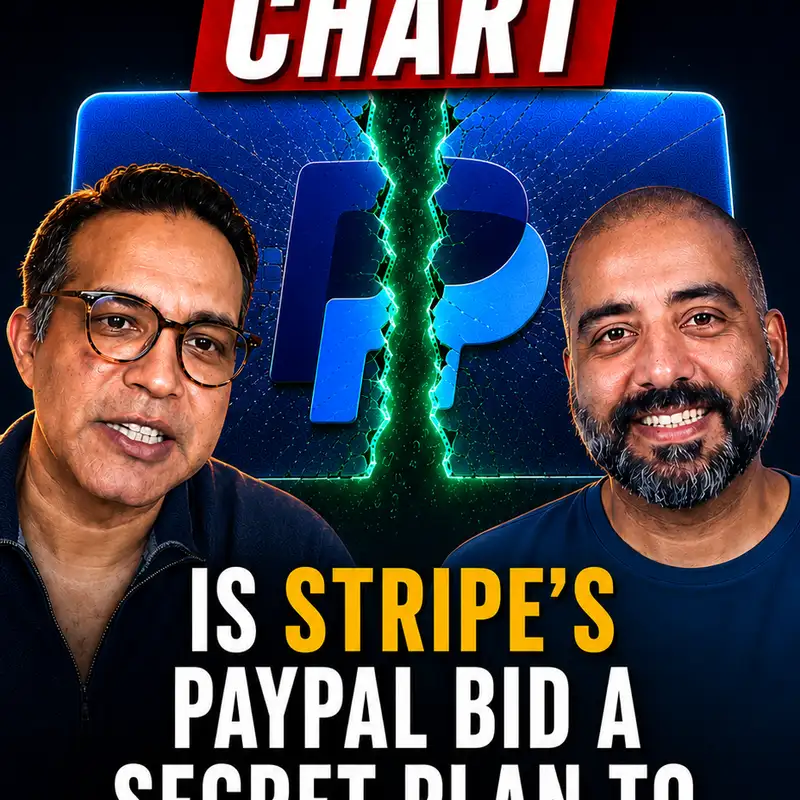
What happens when a $53 billion PayPal acquisition offer shakes the foundations of the payments industry? Join hosts Aman Narain and Zubin Vandrevala in this gripping episode of A2Z Fintech as they dissect the recent bid for PayPal acquisition, a move that could redefine the landscape of financial technology. This acquisition offer, made by heavyweights Stripe, Block, and Advent, has sent ripples through the market, prompting a critical analysis of its implications and strategic maneuvers. The PayPal acquisition has the board responding to the offer with skepticism, asserting that the bid undervalues the company, raising questions about the future of one of the most recognized names in fintech. As the hosts navigate through the complexities of this deal, they shine a light on the key figures involved and the potential repercussions of a breakup for PayPal. Could the individual parts of PayPal be worth more than the whole? This episode of A2Z Fintech dives deep into this provocative question, exploring the strategic interests of the bidding companies and what this means for the future of payments. Throughout the discussion, Aman and Zubin delve into the structure of the offer, providing insights into the competitive landscape of digital payments. They also tackle the regulatory challenges that could emerge as the bidding companies attempt to consolidate their positions in a rapidly evolving market. With the rise of fintech trends such as stablecoins, AI in finance, and blockchain technology, the implications of this acquisition extend far beyond PayPal itself. As they explore the future of PayPal, the hosts draw connections to broader themes in financial innovation, discussing how this acquisition could influence market predictions and the evolving dynamics of bigtech in finance. From Visa and Mastercard to emerging players like Nubank and Revolut, the episode paints a comprehensive picture of the fintech ecosystem. With insights from industry leaders like Jamie Dimon of JP Morgan and the innovative minds at OpenAI, listeners will gain a multifaceted understanding of the current landscape. Whether you're a fintech enthusiast, a professional in the payments industry, or simply curious about the future of financial technology, this episode of A2Z Fintech is packed with valuable insights and thought-provoking analysis. Tune in to uncover the layers behind this monumental acquisition offer and what it could mean for the future of payments and the fintech landscape at large.
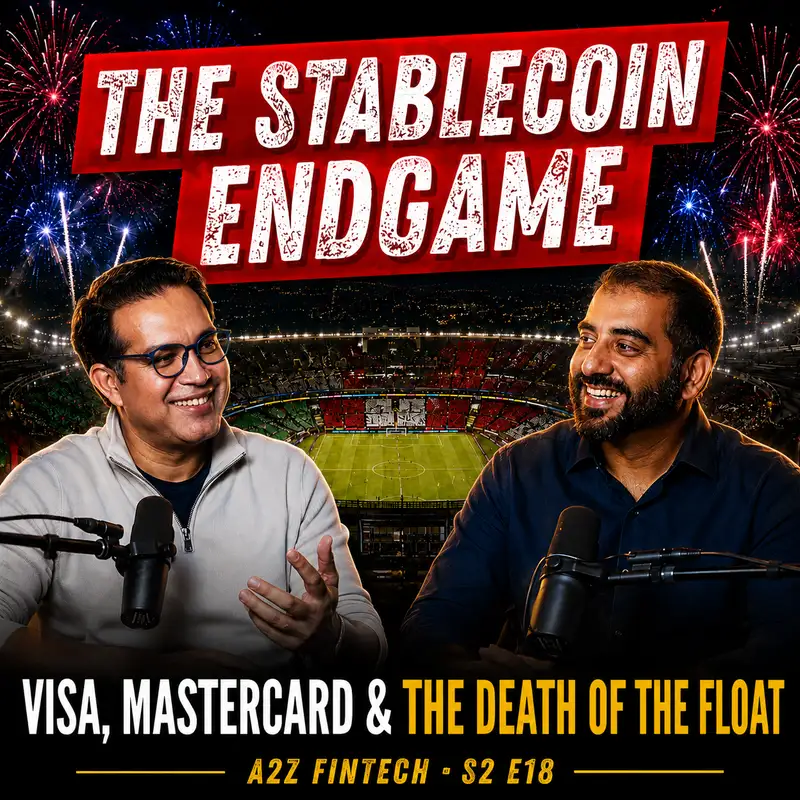
S2 #18

The Rise of OpenUSD: A Game-Changer in Stablecoin and the Future of Payments in the Fintech Landscape

What if the future of stablecoins is here, and it's backed by the giants of finance? Join hosts Aman Narain and Zubin Vandrevala as they dive deep into the groundbreaking launch of OpenUSD, a revolutionary dollar stablecoin that boasts backing from over 140 powerful institutions, including Visa, Mastercard, and BlackRock. This episode of A2Z Fintech uncovers the seismic shifts occurring in the stablecoin market, where traditional players like Tether and Circle may soon face unprecedented competition. As the landscape evolves, Aman and Zubin explore the implications of this consortium model, which signifies a significant transition from single issuers to a more distributed approach. The profits from reserve interests are now set to be shared among distribution partners, reshaping the dynamics of financial technology and the payments industry. Drawing parallels to the Boston Tea Party, they emphasize the theme of economic independence, reflecting on how OpenUSD could empower users to break free from the constraints of traditional banking systems. Could this new dollar stablecoin redefine payments as we know them? The hosts discuss how OpenUSD has the potential to streamline transactions, making them faster and more efficient by bypassing legacy systems like SWIFT. With insights into the future of payments, this episode is a must-listen for anyone interested in fintech trends, digital banking, and the evolving role of blockchain technology in financial innovation.
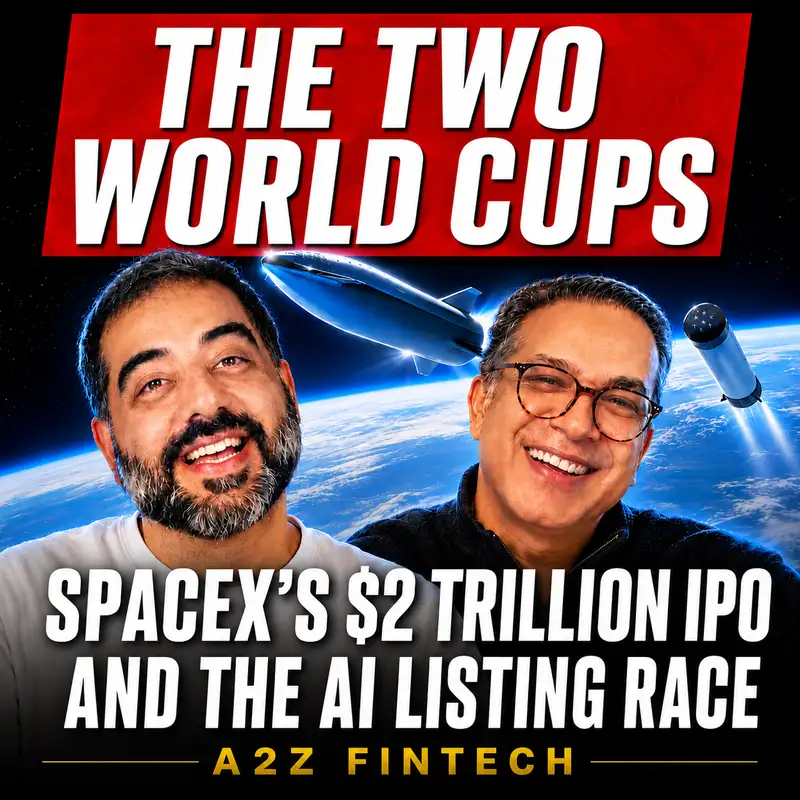
S2 #17

The Game-Changing SpaceX IPO: Inside the AI fueled IPO Boom

What FIFA World Cup and SpaceX IPO have in common? In this riveting episode of A2Z Fintech, hosts Aman Narain and Zubin Vandrevala take you on a journey through the fascinating intersection of global events that are shaping our financial landscape. As the world tunes into the excitement of the World Cup, we also witness the largest stock market SpaceX IPO in history, including the much-anticipated debut of SpaceX. But how do these seemingly disparate events influence the fintech world and our understanding of financial innovation? Join Aman and Zubin, seasoned experts in the fintech space, as they delve deep into the implications of these events. They explore the history of Silicon Valley SpaceX IPOs, shedding light on why companies choose to go public and what trends are currently dominating the market. With insights into the performance of game-changers like SpaceX IPO and Stripe, this episode offers a comprehensive analysis of IPO trends that every business-savvy listener should know. The conversation goes beyond mere statistics; it examines the role of investment banks and the strategic decisions that underpin going public. As we navigate through the current wave of IPOs, Aman and Zubin highlight the potential for job creation in our emerging AI-driven economy and the generational wealth being created through these public offerings. This is not just about numbers; it’s about the future of payments and how digital banking is evolving in tandem with these monumental events. Listeners will gain valuable insights into the fintech trends shaping our world, from the rise of stablecoins to the impact of blockchain technology on traditional finance. With the backdrop of major players like Visa, Mastercard, and JP Morgan, the episode also provides a rich context for understanding the competitive landscape of the payments industry. Whether you’re curious about the financial technology revolution or looking for startup insights, this episode is packed with knowledge that demystifies complex topics. So, are you ready to explore the dynamic relationship between sports and finance? Tune in to this episode of A2Z Fintech for an engaging discussion that promises to enlighten and inspire. Don’t miss out on the opportunity to understand how these global events are not just shaping the fintech industry but are also setting the stage for the future of payments and financial innovation.
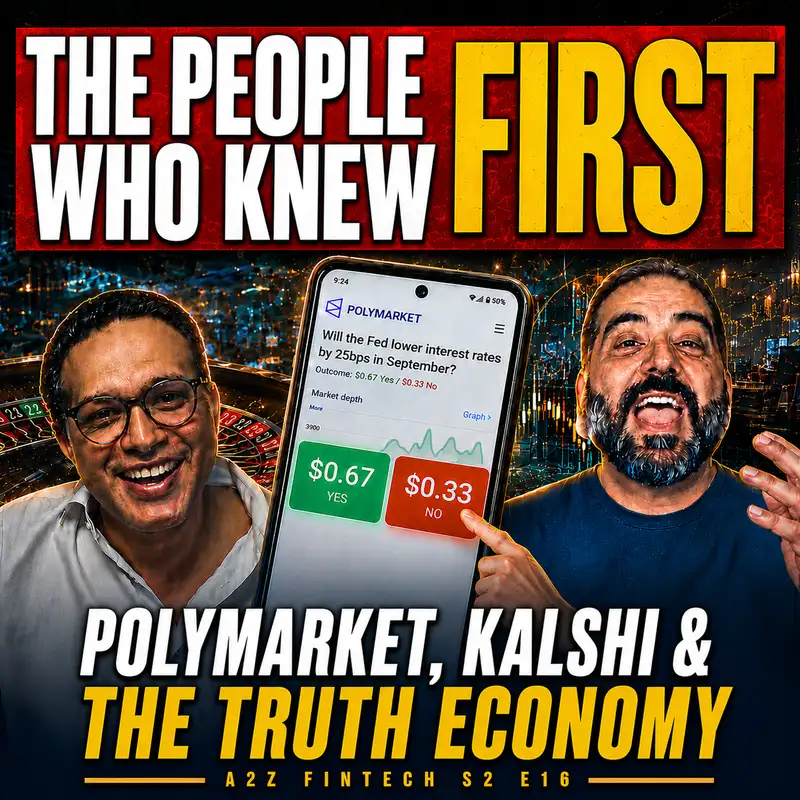
S2 #16

S2E16 — Polymarket, Kalshi and the People Who Knew First

A US Army sergeant bet roughly $33,000 on Polymarket on an arrest he had just been briefed on, and turned it into the price of a house. A Google engineer read his own company's unpublished data and moved about $1.2 million into a private wallet. On a public blockchain, both men left a trail the FBI could follow to the cent. That is the paradox at the centre of prediction markets: the transparency that makes them exploitable is the same transparency that makes them honest. Between September 2025 and April 2026, combined monthly volume on these prediction markets climbed from under $5 billion to about $24 billion, and in October 2025 the parent of the New York Stock Exchange committed around $1.6 billion to the largest of them. Aman Narain and Zubin Vandrevala break down how prediction markets went from a forgotten Wall Street betting ring to information infrastructure, and the harder question beneath the boom: when a market knows before the news does, is the system working perfectly, or is it being robbed? Key takeaways: 1. The transparency that makes these markets exploitable is exactly what makes them honest: the engineer who hid behind a wallet was traced by the same chain he trusted. 2. The political framing is a myth. On Kalshi, 80% of volume is sports and just 4% is politics. 3. ICE bought the data, not the casino: roughly $1.6 billion for a live probability feed it can sell to every bank and hedge fund on its network. 4. Volumes ran from under $5 billion a month to about $24 billion in seven months, with Piper Sandler projecting $8 billion in annual revenue by 2030. 5. A prediction market is not an oracle but a mirror, only as honest as the room it is in. Topics covered: - The two cold-open exploits: a Fort Bragg sergeant and a Google engineer who bet on what they already knew - The intellectual lineage: Hayek on price as information, Hanson's futarchy, Tetlock's superforecasters - Wall Street's unregulated political betting ring, and the $10m wagered on the 1916 election - The modern revival: the Iowa Electronic Markets, Intrade's collapse, and the fall of PASPA - How a prediction contract actually works, and the passport-versus-wallet divide between Kalshi and Polymarket - The full board: Polymarket, Kalshi, PredictIt, Manifold, Metaculus, Robinhood, Interactive Brokers and DraftKings - The data that reorders the story: prediction markets are now mostly a sportsbook in a derivatives licence - The three forces behind the 2024-2026 boom: the KalshiEX ruling, the GENIUS Act, and a presidential endorsement - ICE's ~$1.6 billion move on Polymarket, and why it bought the data and not the gambling - The prosecution: four insider cases, reflexivity, and gambling at derivative scale - The bull case in three layers: parametric insurance, macro hedging, and information infrastructure Chapters: Referenced in this episode: US Army Master Sergeant Gannon Ken Van Dyke and Operation Absolute Resolve; the Google engineer "AlphaRaccoon" and the Year in Search exploit; the Israeli Air Force major and the June 2025 Iran briefing; the MrBeast editor's $4,000 Kalshi trade and $20,000 fine; Friedrich Hayek, Robin Hanson and futarchy, Philip Tetlock and the Good Judgment Project; the Wall Street curb-market and Tammany Hall betting ring, the 1896 and 1916 elections, and Governor Charles Evans Hughes; the Iowa Electronic Markets and their 1.34-point average error; Intrade and John Delaney; Murphy v NCAA; Polymarket on Polygon and Kalshi as a CFTC-designated contract market; PredictIt and Victoria University of Wellington; Manifold, Metaculus and Augur; Robinhood, MIAXdx and Susquehanna; Interactive Brokers and ForecastEx; DraftKings, Railbird and DKeX; KalshiEX v CFTC and CFTC chair Michael Selig; the GENIUS Act; ICE / Intercontinental Exchange and Jeffrey Sprecher; Piper Sandler's $8bn-by-2030 estimate; Boaz Weinstein and Saba; the 12 January 2026 single-day record of $701.7m; the Arizona pre-emption ruling and Minnesota Governor Tim Walz's ban. Related episodes: S2E14 — Machines with Wallets, for the stablecoin-rails and GENIUS Act thread; [TBD — the Mastercard / BVNK stablecoin episode, confirm number]. Hosted by: Aman Narain writes at amanwhoblogs.substack.com. Zubin Vandrevala is your payments provocateur. Enjoying A2Z Fintech? Leave a rating and review on Apple Podcasts. It is the single biggest signal to the Apple algorithm and how new listeners in our world find us. For information and entertainment only. Not financial advice. Transcript:
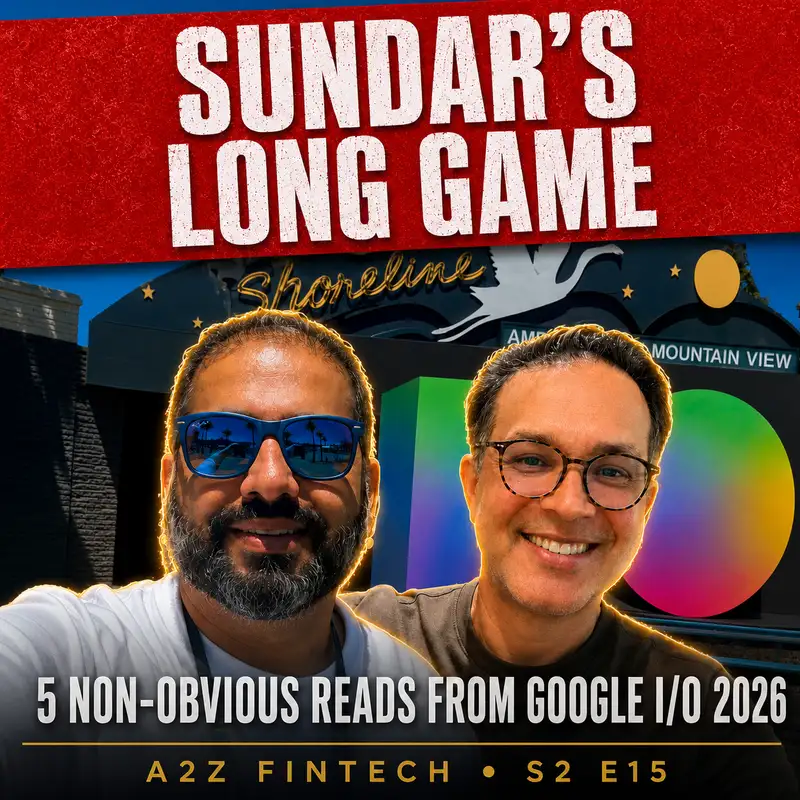
S2 #15

S2E15 — Sundar's Long Game: Google I/O 2026

Twelve hours after Sundar Pichai walked off the Shoreline stage, the recap industry was already ranking his Google I/O 2026 announcements top ten this, best five of that. Two former Googlers with 50 years between them think that misses the story. On Wednesday 20 May, Sundar Pichai closed Google I/O 2026 with a 150-minute keynote that pulled together a 25-year arc. Google built the transformer in 2017. It declared itself an AI-first company at I/O 2016, six years before ChatGPT shipped. The press spent two years arguing Google was behind. Google I/O 2026 was the company quietly revealing it never was. Aman Narain and Zubin Vandrevala break down five non-obvious reads on Google I/O 2026, drawing on their combined years inside Google and Google Pay. Not a top-10 list. Five reads on the long game. Key takeaways: Google has spent 25 years building the AI foundation everyone else is racing to construct in 24 months, and at Google I/O 2026 it stopped pretending that head start did not exist. Gemini Spark is not a chatbot. It is a category response: AI woven into the Google surfaces where most users already live their digital lives. The Universal Commerce Protocol and AP2 are Google writing the TCP/IP of agentic commerce, with Shopify, Visa, Mastercard, PayPal and Gr4vy inside the standards body and AP2 donated to the W3C. SynthID got two minutes of stage time and is the most underrated announcement of the day. Apple made privacy a moat; Google is making trust the next one. Android XR, with Samsung as OEM and Warby Parker and Gentle Monster as the face brands, is the platform play applied to wearable hardware. Fashion is how you blend in, not how you stand out. Topics covered: Why search grew 19 per cent the year AI Overviews was meant to kill it Vidhya Srinivasan, Antigravity, and the rebuilt search box Gemini Spark as a category response, not a product UCP, AP2, and the protocol coalition routing agentic commerce The $5 trillion agentic commerce market and the fraud-liability question nobody is answering Visa Trusted Agent Protocol versus Mastercard Agent Pay SynthID, OpenAI, Nvidia, Eleven Labs, and the web's immune system Android XR with Samsung, Warby Parker, and Gentle Monster What banks, fintechs and merchants should build before Google I/O 2027 Chapters: Referenced in this episode: Google I/O 2026 keynote (Shoreline Amphitheatre, 20 May 2026); Sundar Pichai's "AI-first" keynote at Google I/O 2016; "Attention Is All You Need" (Google, 2017); AI Overviews and Search +19 per cent year-on-year; Antigravity demo from Vidhya Srinivasan; Gemini Spark from Josh and team, formerly NotebookLM; Universal Commerce Protocol with Shopify; Agent Payments Protocol with Visa, Mastercard, PayPal and Gr4vy, donated to W3C; Visa Trusted Agent Protocol; Mastercard Agent Pay; SynthID coalition with OpenAI, Nvidia and Eleven Labs; Android XR with Samsung as OEM and Warby Parker and Gentle Monster as face brands; AlphaGo demo on Android XR. Related episodes: [TBD] Hosted by: Aman Narain writes at amanwhoblogs.substack.com. Zubin Vandrevala is your payments provocateur, recording live from the Shoreline floor at 2 per cent battery. Enjoying A2Z Fintech? Leave a rating and review on Apple Podcasts. It is the single biggest signal to the Apple algorithm and how new listeners in our world find us. For information and entertainment only. Not financial advice. Transcript:
S2 #14

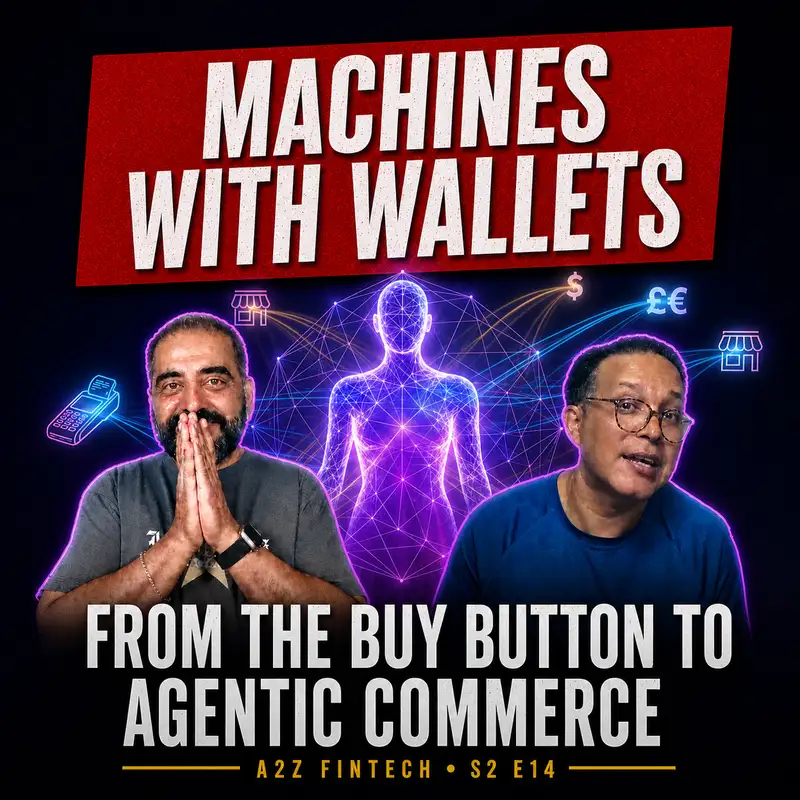
S2E14 — Machines with Wallets: From Buy Button to Agentic Commerce

Patrick Collison says agents will soon account for most online transactions. The Machine Payments Protocol that replaces the buy button is now live, and Stripe, OpenAI, Google, Meta and Microsoft have all signed on. This week at Stripe Sessions 2026, the architecture of agentic commerce stopped being a thesis and started being plumbing. The Machine Payments Protocol, co-authored by Stripe and Tempo, is live. ACP and UCP have settled the discovery layer. Streaming payments are real. Software-as-a-subscription is becoming software-as-a-stream. The buy button is being retired in real time. Aman Narain and Zubin Vandrevala close out the anniversary Double Digest with part two: how money moves when the buyer is no longer human. The 2026 Agentic Stack refreshed, the four horsemen of agentic commerce mapped, the dark horse from China called, the streaming-payments primitive that is quietly rewiring every business model in the next five years, and a six-twelve-twenty-four-month playbook for operators. Key takeaways: 1. The buy button is being replaced by the Machine Payments    Protocol, Stripe and Tempo's "OAuth for money" primitive. 2. The four horsemen are playing distinct hands: Stripe wants    the rails, OpenAI wants the brain, Google wants to protect    search, Visa and Mastercard are fighting to remain a rail    rather than the rail. 3. Streaming payments end batch settlement; software-as-a-    subscription becomes software-as-a-stream. 4. The operator playbook is fix data hygiene first, pick a    protocol stack second, reimagine for streaming third. 5. Stripe is not the next Visa. Stripe is the next Google. Topics covered: - The 2026 Agentic Stack: discovery, execution, safety - ACP and UCP, the two protocols solving merchant-to-agent   discovery - MPP, the Machine Payments Protocol, and why it is becoming   the TCP/IP of agent payments - Verifiable Credentials, Verifiable Intent, and the agent as   an actor with reputation - One in six AI sign-ups being a bad actor, and the rise of   token theft as the new fraud vector - The four horsemen of agentic commerce: Stripe, OpenAI,   Google, Visa and Mastercard - The dark horse from China: Alibaba, Qwen, Taobao, Alipay,   and 120 million agent transactions in a week - Streaming payments, software-as-a-stream, and the death of   batch settlement - The CFO problem: reconciling billing at the granularity of   tokens consumed - The six-twelve-twenty-four-month playbook for founders,   operators, and CFOs - Why Stripe is not the next Visa but the next Google - Anniversary reflections: 30 episodes, 128,000 words, and   the founder-mode payoff Chapters: Referenced in this episode: Stripe Sessions 2026; the Machine Payments Protocol (Stripe + Tempo); the Agentic Commerce Protocol (Stripe + OpenAI); the Universal Commerce Protocol (Google); JD Sports as UCP launch partner; Visa Agentic Ready APAC and LatAm expansion; the Mastercard-BVNK acquisition; Lightspark on Bitcoin Lightning; Stripe's Tempo, Bridge, Privy, Link and Metronome stack; the Fido Alliance agent-identity work; Stripe Radar's token-theft defences; Alibaba's Qwen, Taobao and Alipay; Reed Hastings, Steve Jobs and Andy Grove as re-platforming references. Related episodes: S2E13 — [TBD part one title], the "who" of the Anniversary Double Digest; the Mastercard-BVNK breakdown; [TBD prior agentic commerce episode covering OpenAI's Etsy Instant Checkout]. Hosted by: Aman Narain writes at amanwhoblogs.substack.com. Zubin Vandrevala is your payments provocateur. Enjoying A2Z Fintech? Leave a rating and review on Apple Podcasts. It is the single biggest signal to the Apple algorithm and how new listeners in our world find us. For information and entertainment only. Not financial advice. Transcript:
S2 #13

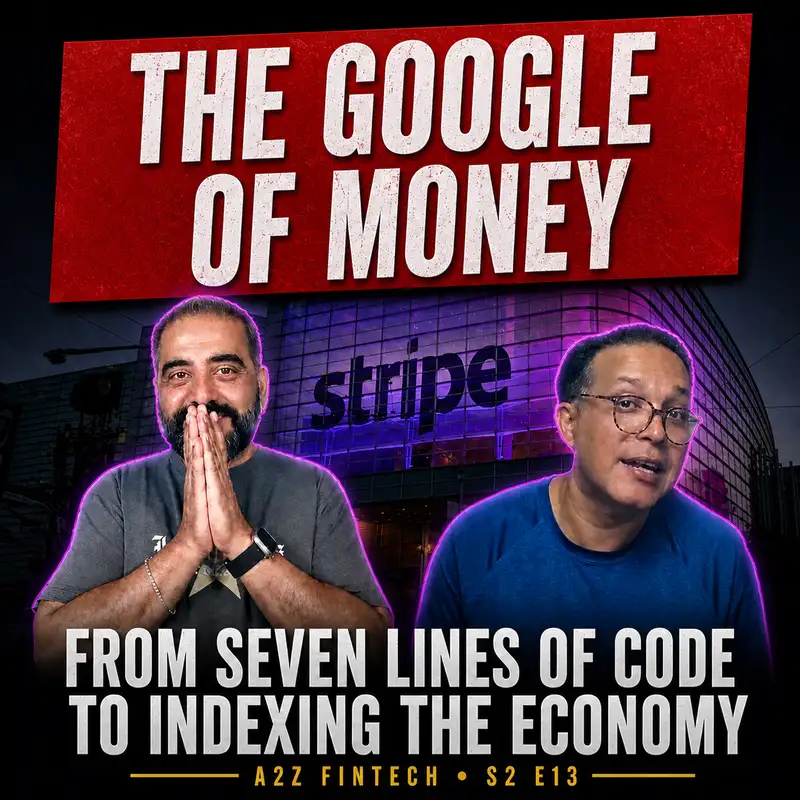
S2E13 — The Google of Money: From Seven Lines of Code to Indexing the Economy

Stripe shipped 288 features in a single morning at Sessions 2026 in San Francisco. The right pattern match for what the company is becoming is not Visa, Mastercard, or PayPal — it is Google in 2006. On the final Wednesday of April, almost ten thousand founders, engineers, and CFOs queued around Yerba Buena Gardens, the same plaza where Steve Jobs unveiled the iPhone nineteen years earlier, to hear Patrick and John Collison announce the largest single-morning product launch in fintech history. (334 if you count the entries on the public roadmap, per Stripe's own footnote.) The 288 launches grouped into five buckets, three of which would have been laughed out of a payments conference five years ago. Aman Narain and Zubin Vandrevala break down what Stripe Sessions 2026 actually shipped, why payments was always the wedge rather than the company, and the long-arc historical parallel that explains the architecture. This is part one of an A2Z Fintech anniversary special, marking 30 episodes and one year since the show's first recorded cameo, on Stripe Sessions 2025. Key takeaways: 1. Stripe shipped 288 product launches at Sessions 2026 in a single morning, grouped into five buckets that share one thesis: payments was the wedge, not the company. 2. Three transformations are running simultaneously: rails (Tempo, Bridge, Privy, Link, the Machine Payments Protocol), mission (GDP of the internet to economic infrastructure for AI), and customer (developer-led to enterprise-led). 3. The right pattern match for Stripe is not Visa, Mastercard, or PayPal. It is Google in 2006: a company that started narrow, ate every adjacency, and built its moat on the index rather than the algorithm. 4. Stripe processed roughly two trillion dollars in payment volume in 2025, equivalent to about 1.5 percent of global GDP, at a 40 basis point take rate that can only be grown by stacking software on top. 5. The unit of growth has changed: Stripe used to grow when more humans bought things online; it now grows when more businesses are created, which is parabolic in the AI era. Topics covered: - The five buckets of Sessions 2026: stablecoin shadow banking, agentic commerce, the full-stack business bank, AI-native revenue, trust at agent scale - Tempo, Bridge, Privy, Link, and the Machine Payments Protocol as the kit you build to be a network, not a payment processor - Why a Brazilian merchant paying a freelancer in Manila no longer needs to touch SWIFT - The Visa-in-1976 parallel for Stripe's stablecoin posture - The mission shift: GDP of the internet was horizontal; economic infrastructure for AI is vertical - Eileen O'Mara, Tyler Bryson, and the quiet construction of a Salesforce-grade enterprise sales motion - Why financial infrastructure now sits in the same enterprise budget category as cloud infrastructure - Two trillion in TPV, 40 basis points, and how that take rate grows from here - The Google of money thesis: phase one to phase four, search ads to Vertex AI, the index as the real moat - Founder leverage and why Patrick and John can run R&D budgets that look more like Bell Labs - A tee-up for Part 2 (S2E14, publishing next week): the Machine Payments Protocol, the protocol war between Visa, Mastercard, OpenAI, Google and Meta, and the playbook for founders Chapters: Referenced in this episode: Stripe Sessions 2026; the 288 launches and 334 footnote; Tempo (layer 1 blockchain co-built with Paradigm, mainnet March 2026); Bridge ($1B+ stablecoin orchestration acquisition); Privy (110M programmable wallets); Link (250M consumer wallets); the Machine Payments Protocol; Metronome; Patrick Collison's "GDP of the internet" mission; Stripe Atlas, Treasury, Billing, Tax, Capital, Issuing, Connect, Radar, Sigma; Stripe's internal tender at ~$107B (reports as high as $159B); TPV ~$2T in 2025, up 34%; net revenue $5.1B; free cash flow over $2B; 40bps take rate; Fortune 100, 500, top US software, and Forbes AI 50 penetration; Eileen O'Mara, Tyler Bryson, Will Gaybrick, Emily Sands, Mike Clayville; the Steve Jobs iPhone keynote at Yerba Buena Gardens, January 2007; Andy Grove, Jensen Huang, Sergey Brin, Max Levchin and the immigrant founder pattern; Google's 1998 mission and the search-to-cloud arc; Google Cloud at ~$50B run rate in 2025. Related episodes: S2E14 — The Google of Money, Part 2: Rewriting the Rules of Agentic Commerce [link TBD] (publishing next week); A2Z Fintech's first cameo on Stripe Sessions 2025 [TBD]; the Mastercard / BVNK breakdown [TBD]; S2E11 — Pit Wall, Podium and Pie: Q1 2026 Fintech Scorecard [TBD]; S1E16 on the one-person enterprise [TBD]. Hosted by: Aman Narain writes at amanwhoblogs.substack.com. Zubin Vandrevala is your payments provocateur. Enjoying A2Z Fintech? Leave a rating and review on Apple Podcasts. It is the single biggest signal to the Apple algorithm and how new listeners in our world find us. For information and entertainment only. Not financial advice. Transcript:
S2 #11

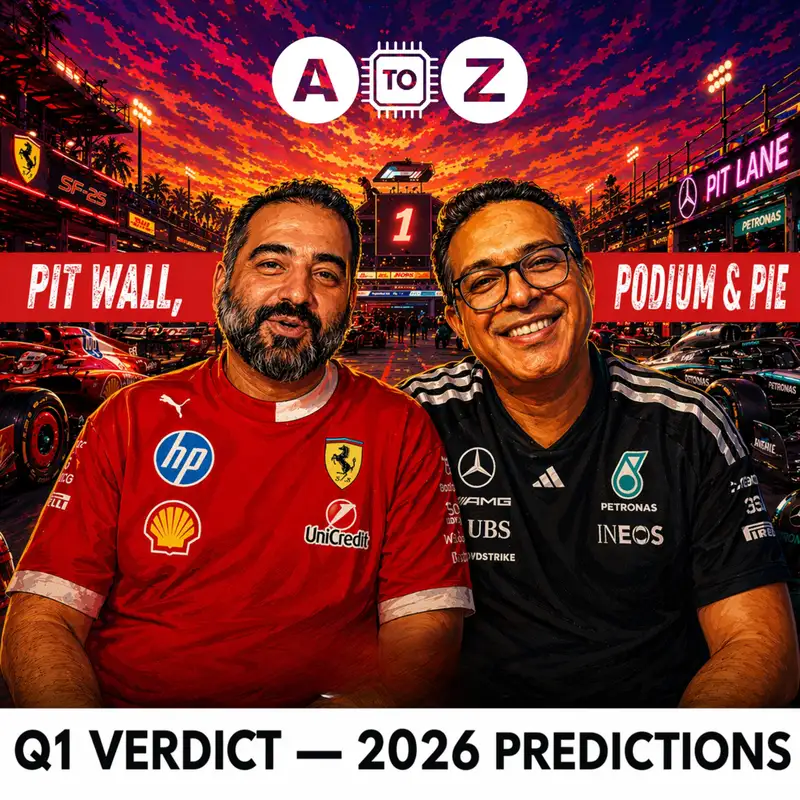
S2E11 — Pit Wall, Podium and Pie: Q1 2026 Fintech Scorecard

Ninety days ago we made ten fintech predictions on this podcast for 2026. Today we graded them in public. Four have already played out fully. Three are directionally correct. One is spectacularly wrong. One is still waiting on a phone call from Ben and David at Acquired. This is the Q1 2026 fintech scorecard, recorded at the quarter-pole of the season. Mastercard's $1.8 billion acquisition of BVNK and Visa Direct's $3.5 billion in annualised stablecoin settlement volume closed out the card networks' capitulation to stablecoins. The OpenAI-Microsoft partnership restructured through a $250 billion Azure commitment and effective compute autonomy for OpenAI. Compute nationalism went mainstream, with sovereign cloud tracking towards $80 billion in 2026. And the Ive-Altman hardware prototype leaked to reviews that, politely, read as paperweight. Aman Narain and Zubin Vandrevala break down all ten fintech predictions: the four on the podium, the three directionally correct, the one spectacularly wrong (JPMorgan-Nubank), and the one still pending. They diagnose why the misses happened, and publish the Q2 to Q4 watchlist: stablecoin integration speed, agentic liability, Nubank's US charter, and the PayPal endgame. Key takeaways: 1. Mastercard's $1.8 billion BVNK acquisition and Visa Direct's $3.5 billion in annualised stablecoin volume confirm the card networks have stopped fighting stablecoins and started operating them. 2. The OpenAI-Microsoft restructuring, a $250 billion Azure commitment paired with compute autonomy for OpenAI, is a conscious uncoupling dressed as a partnership renewal. 3. The UK Competition and Markets Authority made businesses fully liable for their AI agents' actions, building the legal framework for agentic commerce through liability rather than licensing. 4. The fintech predictions that paid off were structural reads of institutional behaviour. The one that missed mistook a neat story for the system's actual logic. 5. GPU clusters are now held by sovereign states the way central banks once held gold, with sovereign cloud spending tracking towards $80 billion in 2026. Topics covered: - The four podium finishes: Visa and Mastercard on-chain, compute nationalism, the OpenAI-Microsoft divorce, the Ive-Altman paperweight - The directional hits: the CUDA killer through open standards, AI-agent liability in the UK, the Q-Day quantum scare, AI in F1 - The dead-wrong call: JPMorgan-Nubank, and why the symmetric story was the wrong one - The reverse-merger trend: neobanks buying distressed regional banks for the licence and the deposits - The Q2 to Q4 fintech watchlist: corporate treasurers on stablecoins, global agentic liability, Nubank's US charter, the PayPal endgame - The pattern beneath the scorecard: why structural reads beat narrative reads, and how to tell the difference Chapters: Referenced in this episode: Season 1 finale predictions (December 2025); Mastercard / BVNK definitive agreement (March 2026); Visa Direct stablecoin settlement volumes; Gartner sovereign cloud forecast; OpenAI / Microsoft restructured partnership and $250 billion Azure commitment; Huawei Ascend 950PR and Atlas 350; Google OpenXLA; UK Competition and Markets Authority AI-agent guidance; Q1 post-quantum cryptography research reducing qubit requirements for RSA-2048 from 20 million to under 1 million; Mercedes x Microsoft F1 AI partnership; Red Bull x Oracle AI strategy agent; JPMorgan Q1 commentary; Acquired with Ben Gilbert and David Rosenthal. Related episodes: the Season 1 finale predictions; the Mastercard-BVNK deep dive; The Purple Revolution on Nubank; the PayPal endgame. Hosted by: Aman Narain writes at amanwhoblogs.substack.com. Zubin Vandrevala is your payments provocateur. Enjoying A2Z Fintech? Leave a rating and review on Apple Podcasts. It is the single biggest signal to the Apple algorithm and how new listeners in our world find us. For information and entertainment only. Not financial advice. Transcript:
S2 #10

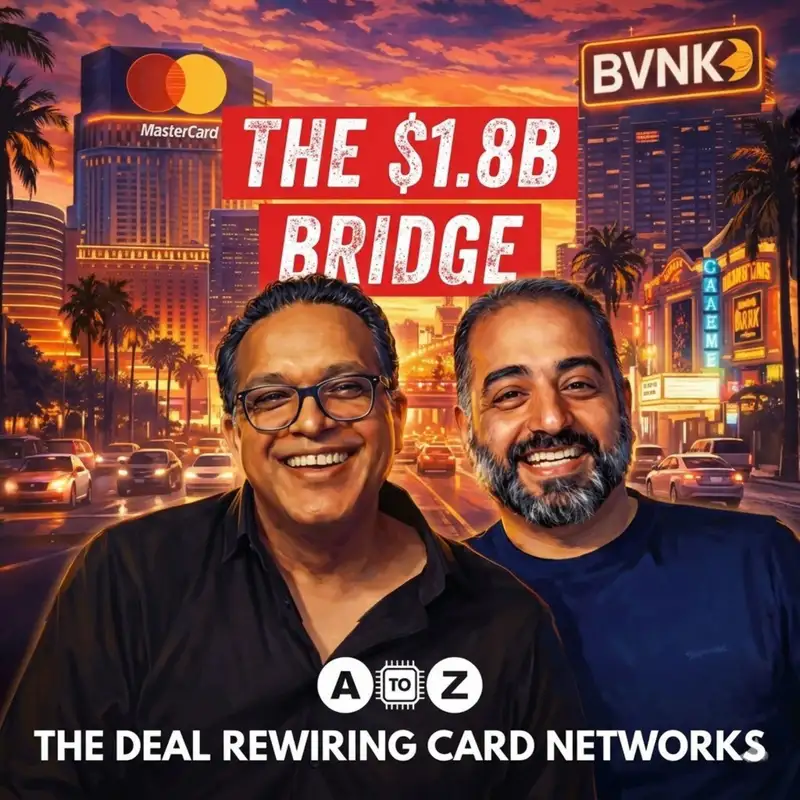
The $1.8B Bridge: The Mastercard-BVNK Deal Rewiring Card Networks

Mastercard paid $1.8 billion for BVNK, the largest stablecoin acquisition in history. Four months earlier, Coinbase walked away from a $2 billion deal for the same company. What changed, and what it means for Visa, Amex, Capital One, JPMorgan, and Circle. On Tuesday 17 March, Mastercard announced a definitive agreement to acquire BVNK, the UK-based stablecoin infrastructure company, for up to $1.8 billion. It is the largest stablecoin acquisition in history, eclipsing Stripe's $1.1 billion purchase of Bridge. The twist: just four months earlier, Coinbase walked away from a $2 billion deal for the same asset. Aman Narain and Zubin Vandrevala break down why Coinbase folded, what Mastercard saw that Coinbase didn't, and what this transaction tells us about the future of card networks, cross-border payments, and the unbundling of financial infrastructure. Topics covered: - The deal mechanics: $1.5B fixed, $300M contingent earn-out - Why Coinbase walked at a 50x revenue multiple - The Stripe-Bridge precedent that made this inevitable - Visa's uncomfortable position as investor in an acquired competitor - Capital One's stealth assembly of a full-stack stablecoin platform via Discover and Brex - JPMorgan's deposit-token counter-strategy with JPM Coin - Circle, Paxos, and the shrinking pool of independent infrastructure targets - Why this isn't a stablecoin story. It's a payments story. Chapters: Referenced in this episode: Mastercard / BVNK definitive agreement; Stripe / Bridge close; Coinbase / Deribit; Capital One / Discover; Capital One / Brex; Visa x Bridge; JPMorgan Kinexys; Axios reporting on the Coinbase collapse. Hosted by: Aman Narain writes at amanwhoblogs.substack.com. Zubin Vandrevala is your payments provocateur. For information and entertainment only. Not financial advice. Transcript:
S2 #7

PayPal's Last Stand: The Rise, The Coup & The $300 Billion Fall of Fintech's OG

In September 2000, Elon Musk boarded a plane for his honeymoon. By the time he landed in Sydney, he was no longer CEO. His co-founders, Peter Thiel and Max Levchin, had staged a midnight coup, scrapped his everything-app vision, killed the X.com brand, and reborn the company as PayPal. Twenty-five years later, that company has gone from a $360 billion peak to a $65 billion acquisition target. And Elon still owns X.com. In this episode, Aman Narain and Zubin Vandrevala perform a full autopsy on fintech's most important company, tracing PayPal from its PayPal Mafia origins through five failed CEOs, a $300 billion collapse, and three possible futures. What You Will Learn The Honeymoon Coup — how PayPal was born on betrayal in a Palo Alto boardroom The Golden Cage — how the eBay acquisition killed PayPal's killer instinct Prof Z's Three Eras: Trust Layer, Aggregator Era, and the Commodity Trap The CEO Parade — five personalities who could not escape the brand's gravity The Interface War — how Apple Pay and Shopify made PayPal invisible Three Endgame Scenarios — Stripe acquisition, JPMorgan buyout, or Elon's Revenge Episode Timestamps 00:00 — Cold Open: The Honeymoon Coup 04:30 — Zubin's new CCO role at Gr4vy and travel check-in 08:00 — The PayPal Mafia Genesis and the X Factor 16:00 — The eBay Era: The Golden Cage 23:00 — Prof Z's Segment: The Three Eras of PayPal 32:00 — The CEO Parade and the Card Scheme Paradox 38:00 — The Endgame: Three Scenarios for PayPal's Future 45:00 — The Mic Drop: The Training Wheels Effect Key Concepts Discussed The Commodity Trap — when solving trust too well makes you irrelevant The Interface War — why hardware (Apple/Google) beat software (PayPal) The Merchant OS — how Shopify and Adyen built closed-loop ecosystems The Accountant CEO — when boards stop hiring builders and hire operators Frequently Asked Questions Why is PayPal declining? PayPal is losing the interface war to Apple Pay and Google Pay, which use biometric authentication to remove PayPal's friction advantage. At the merchant layer, Stripe and Adyen offer superior developer APIs and auth rates. PayPal's core moat, digital trust, has become a commodity handled by device hardware, not a standalone service. Who might acquire PayPal in 2025 or 2026? Three scenarios are most discussed. First, Stripe — the Collison brothers want PayPal's 400 million consumer accounts to complement their developer-first merchant stack. Second, JPMorgan and Jamie Dimon could acquire PayPal's consumer base in a single transaction. Third, Elon Musk, who still owns X.com and needs PayPal's regulatory licences across 200 jurisdictions to execute his everything-app vision. What is the PayPal Mafia? The PayPal Mafia refers to the founding team of PayPal, including Peter Thiel, Elon Musk, Reid Hoffman, Max Levchin, and David Sacks, who went on to found or fund LinkedIn, Palantir, YouTube, Tesla, SpaceX, Yelp, and OpenAI. They are considered the founding generation of modern Silicon Valley. What happened to X.com? X.com was Elon Musk's vision for a global financial super-app. After a boardroom coup in 2000, the company was rebranded as PayPal. Musk reacquired the X.com domain from PayPal in 2017 and later rebranded Twitter as X in 2023, partly reviving his original ambition for an everything-app. What is the Commodity Trap in payments? The Commodity Trap describes how PayPal's greatest achievement, making digital payments feel safe, ultimately destroyed its competitive advantage. Once consumers universally trusted digital payments, the trust layer became commoditised and handled by device biometrics. PayPal no longer owned the thing it had spent twenty years building. About the Hosts Aman Narain is the Founder of A2Z Advisors with 25+ years of experience across Google, HSBC, Standard Chartered, Schroders, and BankBazaar. Zubin Vandrevala is the Chief Commercial Officer of Gr4vy and a former payments executive with experience across Visa, Citi, and global financial institutions. Related Episodes The Last Family Portrait: Schroders, Nuveen and the Death of Mid-Sized Active Management 10 Bold Predictions for Fintech in 2026 Listen and Subscribe RSS Feed: This episode: All episodes: Connect With A2Z Fintech LinkedIn: A2Z Fintech Podcast Substack: A Man Who Blogs by Aman Narain YouTube: A2Z Fintech Disclaimer: This podcast is for educational and entertainment purposes only. Nothing discussed constitutes financial, legal or investment advice.
S2 #4

NuBank’s US License: The Purple Revolution Arrives

The US banking fortress just got a new neighbor. NuBank—the Latin American titan with 127M+ customers—has officially announced its US National Bank License. In this minisode, Aman and Zubin break down why this isn't just another fintech launch. We explore the "Wayne-dependent" reality of US regional banks stuck on 1980s COBOL code and why NuBank’s $1 cost-to-serve makes them a lethal competitor to the "Hollow Middle" of American finance. Highlights include: The COBOL Crisis: Why US regional banks are being held hostage by 40-year-old software. Hard Mode Mastery: How NuBank conquered Brazil and why that makes the US market look like "Easy Mode." Focus vs. Breadth: Why NuBank is succeeding where Revolut is still fighting for regulatory ground. The Death of the Legacy Tax: What a cloud-native "siege engine" means for your wallet. Chapters:  00:00 The Hook: COBOL vs. The Purple Glow  01:30 The Backstory: Fighting "Hard Mode" in Brazil  04:30 The US Map: Mega-Banks vs. Hollow Regionals  07:00 Secret Sauce: Why NuBank is different from Revolut  09:30 Aman’s Mic Drop: The End of the Legacy Tax ,  NuBank US License, NuBank Expansion 2026, A2Z Fintech, David Velez, Cristina Junqueira, National Bank Charter, JPMorgan vs NuBank, Revolut US License, Chime vs NuBank, Jamie Dimon, Fintech Disruption 2026, Legacy Banking, COBOL programming bank, Cloud Native Banking, Cost to Serve Fintech, Core Banking Transformation, Digital Transformation Banking, Fintech Singapore, Fintech Brazil, US Banking Crisis, Neobanks USA
S2 #1

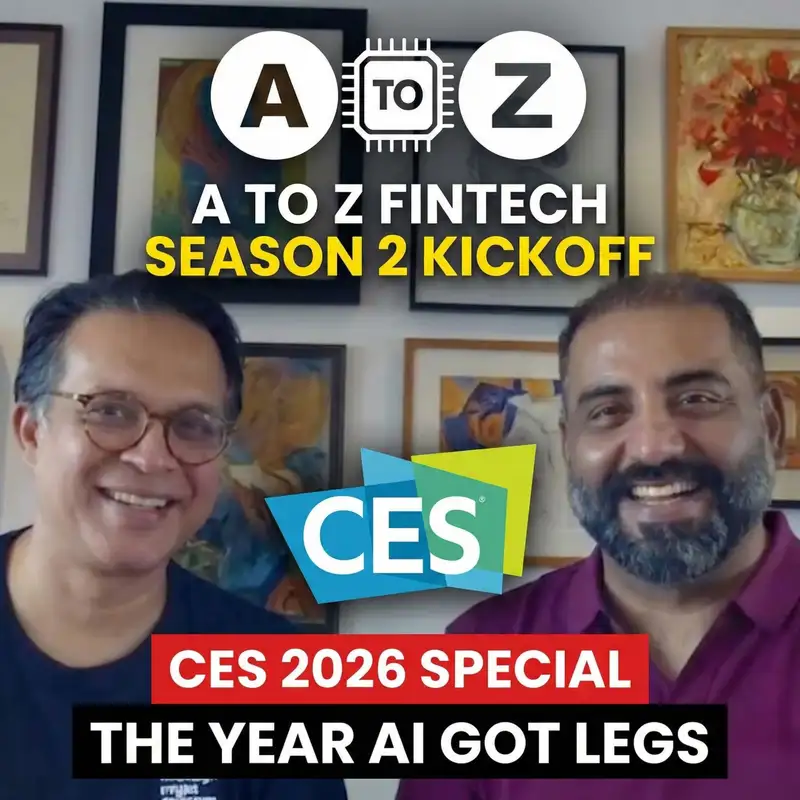
CES 2026: Top 10 Gadgets & The Physical AI Era (S02 E01)

Welcome back to Season 2 of A to Z Fintech! Aman and Zubin are back from the holidays, but their brains are still in Vegas. This isn't just a gadget review; it’s a look at the "Re-Materialization" of technology. We are moving from a decade of "software eating the world" to "AI moving the world." From Nvidia’s shift into the laws of physics with Project Cosmos to the "Bot-naissance" of humanoid robotics, we break down the three mega-trends redefining hardware. Plus, we review the Top 10 pieces of tech from CES 2026, including shape-shifting phones, stair-climbing vacuums, and the lollipop that vibrates music into your jawbone. In this episode, we cover: The Macro View: Why Nvidia is no longer just a chip company. The Shift: How Chinese manufacturers (Roborock, XREAL) flipped the script from "Factory" to "Innovator." The Top 10: Foldables, rollables, wearables, and the ultimate smart fridge. Featured Gadgets: Samsung Galaxy Z TriFold & Lenovo Rollable: When hardware adapts to your workflow. XREAL "Project Aura": The death of the physical monitor? Withings Body Scan 2: The $600 "Health-is-Wealth" station. Lego Smart Bricks: Screen-free magic for the next generation. 2026 Bespoke AI Family Hub: The fridge acting as your kitchen’s CFO. Roborock Saros Rover: The vacuum that finally learned to climb stairs. Uber/Lucid Robotaxi: The "Passenger-as-Guest" economy. German Bionic Exia: "Physical AI" you can wear. Samsung Micro RGB TV: 130 inches of digital art. HP EliteBoard G1a: The PC inside a keyboard. Timestamps:(00:00) Cold Open: The CES Fever Dream(00:45) Season 2 Kickoff & Banter(03:00) The "Don't Sell Your 401(k)" Disclaimer(04:00) Trend 1: Nvidia & The Era of Physical AI(06:15) Trend 2: The Bot-naissance (Robots get legs)(08:00) Trend 3: China’s "Front-of-House" Flip(10:00) Gadget Review: The Shape-Shifters(12:00) AR Breakthroughs: XREAL(14:00) Health Tech: Withings Body Scan(16:00) Future of Play: Lego Smart Bricks(18:00) The AI Supply Chain Fridge(20:00) Robotics: Roborock Saros(22:00) Autonomous Living: The Lucid Robotaxi(24:00) Wearable AI: Exoskeletons(26:00) The 130-inch Window: Samsung Micro RGB(28:00) The Wacky: Hologram Waifus & Musical Lollipops(29:00) The Mic Drop: The Re-Materialization of Tech
Previous Page

Displaying 1 - 20 of 34 in total

Next Page