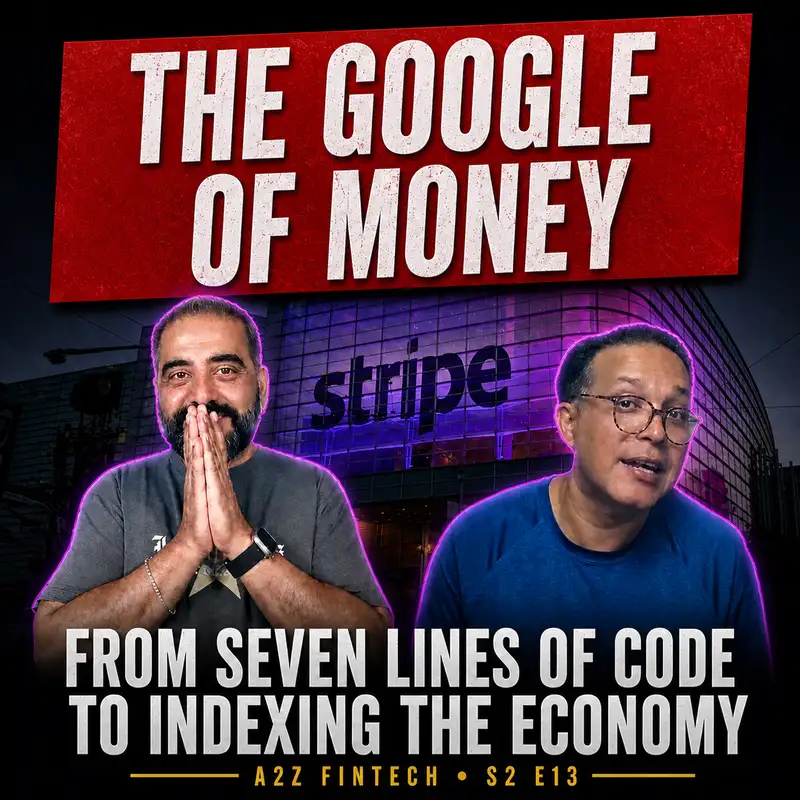
Zubin: Picture this, Aman. It's a cloudless final week of April 2026 in San
Francisco. The kind of week that makes the city look like a brochure, not a forecast.
And around the perimeter of Yerba Buena Gardens, there's this
long, slightly smug queue of founders, engineers, CFOs, me,
and a non-trivial number of people whose LinkedIn bio just says "building."
Which, when you think about it, is the most beautiful irony in modern tech.
A company that has spent every waking moment of the
last 15 years removing friction, killing the click,
has built an event so popular that almost 10,000 people are
politely standing in line for an hour just to be allowed inside.
Aman: And here's the thing that hit me when I
saw all those photos coming out of the Moscone.
This is the same plaza where 20 years ago, actually 19 to be precise,
people queued in cargo shorts and lanyards to hear Steve Jobs unveil
a piece of glass and aluminium that was about to eat the world.
The same patch of grass, same lighting, same nervous energy.
Except this time, they're not queuing for hardware, they're queuing for
two brothers from Ireland talking about unlocking the GDP of the internet.
Two boys who grew up on a sheep farm in County Limerick, schooled themselves
and ended up writing the financial plumbing for the entire internet.
Zubin: And the common thread is unmistakable.
A company that seemingly came out of nowhere, built by immigrants who
arrived looking for a piece of the dream and ended up coding the dream.
Aman: It's the recurring theme or script of Silicon Valley. Apple, Jobs and
Wozniak, one the son of a Syrian immigrant. Yahoo, Jerry Yang from Taiwan.
Intel, Andy Grove, who escaped Hungary with nothing,
partnered with Noyce and Moore to build the silicon age.
Zubin: Then the search age, Google, Sergey Brin born in Moscow. The AI age, Nvidia,
Jensen Huang from Taiwan. Even the mafia itself, PayPal, was an assembly line.
Musk from Pretoria, Thiel from Frankfurt, Levchin from Kyiv.
Aman: It's as if the secret sauce of the Valley,
Zubin, isn't just venture capital, it's a visa.
You take the world's most ambitious outsiders, put them in a room,
and they don't just join the economy, they build the rails for it.
Zubin: Pattern so reliable you could trade it. Build a wall, an
immigrant climbs it, and ten years later they own the building.
Aman: Again and again.
Zubin: Which brings us, on this particular Sunday,
to a moment that feels personally significant.
Because almost one year ago this week, Aman and I sat down to
record our very first cameo on a podcast about this same event.
Aman: And that is where this whole strange,
wonderful experiment called A2Z Fintech began.
Welcome back to A2Z Fintech, the show where we break down
finance, tech, people and power, one letter at a time.
I'm Aman, recording from a stupidly humid morning here in Singapore.
Zubin: And I'm Zubin, still in the San Francisco Bay Area, still mainlining my
espresso, and frankly, a bit emotional, because this is episode 13 of season two, which,
insanely, is our 30th episode overall.
30 episodes in 12 months, which according to Google
Analytics is 28 more than the median podcast ever ships.
Aman: Yeah, you know, the graveyard of
fintech podcasts is full of episode threes.
We're now in the territory where strangers in Dubai and London quote
a mic drop back at me at conferences, which is sort of flattering,
but also slightly terrifying.
Zubin: One year ago, we were two guys with
strong opinions and no microphone discipline.
But 30 episodes in, we called the Schroders funeral,
the Purple Revolution, the OG of payments going down,
the Mastercard and BVNK acquisition before half the analysts.
Aman: The promise we made in episode one is the same one we're keeping today.
Non-obvious insights on finance, tech, people, and power. Software ate the world.
AI is now eating software. And money, the connective tissue of
all of it, is being completely replumbed underneath our feet.
Zubin: Which makes today the perfect anniversary special. The company
that kicked off this podcast just had its own parabolic year. Stripe.
Aman: And you know, because we have a year of credibility to spend, we're
doing something we've never done before. This episode is a double digest.
Archie Comics, 1980s, if you know, you know. Two parts, nearly one hour, Zubin.
Zubin: Yeah, yeah, yeah, yeah. Part one: how Stripe is becoming, wait for
it, the Google of money. From seven lines of code to indexing the economy.
The 288 launches grouped into five buckets, the three non-obvious
insights, and frankly, a heretical thesis about who Stripe has become.
Aman: And part two is one that Zubin and me
together have been thinking about for a while.
It's about rewriting the rules of agentic commerce,
from the buy button to the machine payments protocols.
The whole protocol war, agentic commerce, OpenAI, Google, Meta, Visa,
Mastercard, and bringing that all together, the playbook for founders.
Here's the executive contract for the next 60 minutes. Three transformations
that move enterprise budgets. Four horsemen's protocol map for 2027 bets.
And a six, 12, and 24 month playbook your strategy team can run on Monday.
Zubin: Alright, sit down, cancel the second
coffee. We have plenty to keep you awake.
Aman: But before we light the engines, the founder mode disclaimer, Zubin.
Zubin: This podcast is for informational and
entertainment purposes only. Our views are our own.
This is just two dudes riffing and continuing to riff,
not those of any organisations that we're linked with.
Stay smart, stay solvent, and please, for the love
of God, do not let an LLM negotiate your mortgage.
Aman: Ooh, that's good advice, Zubin. Now, last year,
50 announcements at Sessions felt like a fire hose.
This year, the screen behind Patrick Collison said 288, Zubin.
Zubin: Wild.
Before anyone in the comments section tries to be clever, yes, Stripe themselves
admitted that if you actually count the entries on their public roadmap,
it's 334.
Their footnote literally reads, and I quote, "if you've manually counted these
entries or used an agent to do so, you might have noticed there were 334 items.
First of all, if you're this type of person, we are hiring."
Aman: It is peak Stripe. The launch is so
big that it had its own recruiting funnel.
Zubin: No human can hold 288 features in their head. So we've attempted to compress
it all week into sort of five buckets. It is really, really, really dense.
So let's give this a shot. Bucket one: stablecoin shadow
banking. Treasury stablecoin accounts in over 150 countries.
Bridge moving money across Tempo, Plasma, Celo and Sui.
Privy with flexible custody on a wallet to wallet basis.
Idle balances earning yield in DeFi worlds on Morpho. The
cross-border story is no longer a pilot. It is the pipe.
Bucket two: agentic commerce and machine payments. The agentic commerce
suite running on Meta and Google, as well as OpenAI and Microsoft.
This is, again, across the ecosystem.
The machine payments protocol co-authored with Tempo, letting agents
pay each other in stablecoins or fiat using a shared payments token.
Link with what, 250 million consumer wallets retrofitted into an agent wallet.
So your AI can spend your money, but only inside the boundaries you set.
Aman: Still with us? Bucket three is the one that scares the regional banks.
Bucket three is the full stack business bank. Treasury supports 15 currencies now.
Free instant transfers between any two businesses on Stripe. A
Stripe Mastercard with 2% cash back. Idle balances, they earn yield.
Atlas founders can now receive seed money in fiat or stablecoin. They
are openly building the commercial banking package for the internet.
Zubin: Jump in real quick out there. I was sitting with a partner that
builds a lot of its value enabling cross-border payments at a premium.
When that was announced on the main stage, I could see them
jumping onto their Slack channels and really going back and forth.
That is game-changing, the free instant.
Aman: I couldn't agree more with you, Zubin.
I've spent three years before this at HSBC in commercial banking,
and I think the opportunity in treasury and beyond is just massive.
It's really clever of Stripe to get on that bandwagon.
Zubin: Massive, massive.
Aman: Now bucket four is the AI native revenue
infrastructure. Streaming payments via Metronome plus Tempo.
Charging for an LLM token at the moment it is consumed, in real time,
micropayments as low as 1%. The Stripe database, managed read-only Postgres.
Stripe Projects, where developers or their agents can spin up a full
commerce stack from inside their IDE. John Collison had a great quote.
He said, "Vibe coding is so 2025. The leading edge now is vibe deploying."
Zubin: Bucket five: trust and fraud at agentic scale. Like Radar
upgrades against token theft, free trial abuse and bot fraud.
One in six attempted sign-ups on AI services running on Stripe is a bad
actor. Statement: free trial abuse has more than doubled in six months.
And Disputes has expanded a payments foundation model that boosts card
testing detection by 64%. All in itself really, really huge. And expanded.
I would say even Radar, which has traditionally been a card
fraud model, has expanded into Radar for Issuing as well.
Aman: Zubin, so that was a lot. Let's recap that. Stablecoin shadow bank, agentic
commerce, full stack business banking, AI native revenues, trust at agent scale.
Five buckets, 288 features, one thesis.
Zubin: One thesis, my friend, one thesis.
Aman: And Da Vinci said, genius is making the complicated simple. I hope
we just turned 288 announcements into five memorable sentences for you.
Hashtag masterclass, even though that's dubious.
Zubin: I'll take it.
But here's where it gets interesting, because if you stare at those five
buckets long enough, you realise Stripe isn't about these five things at all.
They're transforming themselves and the internet of
money in three fundamental ways, all happening at once.
And those three ways are the three non-obvious insights from Sessions
2026 that we wanted to dive into. So let's take them in order.
Alright, this is the first non-obvious insight,
and I want to say it as cleanly as I can.
Stripe is no longer a payment processor that runs on Visa and Mastercard rails.
Stripe is a payments platform, much like
the network was originally built on top.
Aman: Now you know, Zubin, that sentence two years ago would have been
laughed out of every payment conference in Europe. Now, it's just true.
Zubin: Yeah, steelman, hit it with me. For
15 years, the Stripe story was the same.
Seven lines of code, plug into Visa and Mastercard, abstract the mess, charge
2.9% plus 30 cents. Stripe was the front end of everyone else's rails.
A beautifully designed lobby for a building
owned by Visa, Mastercard, and the issuing banks.
Aman: And that was the deal. The networks took interchange, the banks
took fees, the issuers took their take. Everybody took their coupon.
Zubin: And now look at what Stripe Sessions 2026 actually shipped.
Aman: Tempo, a layer one blockchain co-built with Paradigm. Mainnet in March.
Zubin: Bridge, the stablecoin orchestration platform, bought for over a billion.
Aman: Privy. Wallet infrastructure. 110 million programmable wallets.
Zubin: Link. 250 million consumer wallets now weaponised as an agent wallet.
Aman: And the machine payments protocol, an open standard
that other networks, Visa included, have already adopted.
Zubin: Aman, this is not a payments processor. This
is the kit you build if you want to be a network.
Aman: Told you.
Zubin: Patrick called it the largest international launch they have ever done.
Aman: Translated: a merchant in Brazil paying a freelancer in Manila
no longer touches SWIFT. No correspondent bank, no 7% FX spread.
USDC over Tempo into Privy wallet, out in pesos via Bridge.
The whole transaction never leaves the Stripe perimeter.
Zubin: And this is what nobody is saying out loud. The card networks
were built on a specific bargain. Visa and Mastercard set the standards.
Banks took the credit risk. Merchants ate the interchange.
Stripe is quietly rebuilding that exact bargain, but with stablecoins as
the rail, Bridge as the standard settler, and Treasury holding the float.
Aman: You know, Patrick was asked a year ago
whether Stripe would launch its own stablecoin.
He said, "no,
we want to catalyse stablecoin adoption," which is the exact answer Visa would have
given in 1976 if you'd asked them whether they wanted to mint their own currency.
They didn't need to. They just needed to define the rules.
Zubin: And Aman, the genius is that they've hidden the friction. Nobody wants
to manage private keys or gas fees, whatever you want to call it, right?
Stripe added a parameter to the Payment Intents API, click, enable stablecoin
payments, and you are global. Which gets us to the punchline, right?
For 15 years, every payments thinker has framed the Stripe versus Visa
question as "who owns the merchant relationship?" Wrong question.
The right question has always been, who owns the rails?
Aman: And the answer in 2026 is Stripe is now building its own.
Zubin: It's no longer the lobby. It is the building.
Aman: That's transformation one: rails. Now transformation two,
let's talk about mission. This brings us to insight number two.
And this one's about mission creep done right.
Zubin: Patrick has been saying the same line for decades. "Increase the GDP
of the internet." Every annual letter, every keynote, every founder dinner.
One of the greatest mission statements of modern tech.
Aman: Yeah, I could think of another one, but yeah, this was up there. Listen
to what he actually said on stage on Wednesday. You were there, Zubin.
He said, "from what I understand, AI is the biggest
platform shift for the economy since the internet.
And in the not too distant future, agents
will account for most transactions online.
The enterprises and startups behind this
wave are overwhelmingly building on Stripe."
Zubin: You know, Aman, that is not a mission about the internet,
right? That is a mission about the entire economy replatformed.
Aman: I totally agree. And I think he repeated this in a smaller
room and he said, "every business now faces two imperatives.
One, figure out how you're going to reinvent your
product, and two, reimagine how that business works."
Zubin: This is not the language of a payments processor. That is
the language of a CEO talking to other CEOs about the next 20 years.
Aman: Yeah. And you know, here's the non-obvious bit about it. The mission
didn't just expand, it changed shape. The GDP of the internet was horizontal.
Every site is in scope. The economic infrastructure for AI is vertical.
Plumbing for a specific kind of economic actor,
the agent, who doesn't yet exist at scale.
Zubin: And to support that, look at what Stripe has
added to its product surface in the last 24 months.
Aman: Let me have a go. Tax, billing, Atlas, capital,
treasury, issuing, connect. The list goes on.
You look at projects like Tempo, Privy, talked about Bridge,
we've talked about Metronome. Jesus, it's incredible, Zubin.
Zubin: It is crazy. And the back of the house is enormous,
right? Like the revenue and the finance automation suite.
We are again, like you said, billing, tax, invoices, revenue recognition, was at
a $500 million run rate this last year, publicly targeting 1 billion in 2026.
Stripe Billing alone has almost 300,000 customers and runs
nearly 200 million active subscriptions. Just insane.
Aman: Honestly, it's just staggering. The only other company that
reminds me of this, if I digress for a second, is Anthropic.
And even Anthropic, I mean, Anthropic's doing an incredible job,
but they're doing it in a non-regulated industry for the moment,
and Stripe's doing this kind of frenetic pace in a regulated industry.
It's just unbelievable.
So the company that started with seven lines of code for accepting cards
now runs your subscription, computes your sales tax in 80 countries,
files your incorporation, gives you a corporate card, holds your balance,
lends you your working capital, manages your stablecoin treasury,
fights fraud for you, processes your disputes,
and increasingly hires and pays your agents.
This is not a payments company, this is a
finance department on sort of turbocharged APIs.
Zubin: Yeah, and here's what most analysts have missed. The unit of growth
has changed. Stripe used to grow when more humans bought things online.
I think, and you and me are talking about it,
Stripe now grows when more businesses are created.
Aman: And you know, at the risk of becoming Patrick's, like,
famous quote bot, there is a parabolic rise in new firm creation.
And he said, and I quote, something as far as we can tell really has changed over
the last couple of months because of AI, the entire economy is replatforming.
I don't think he's wrong.
Zubin: You know, this is consistent with what we know
from elsewhere, right? Like US new business applications.
And Patrick showed this, or was it maybe John
Collison, his brother, who showed this on stage?
US new business applications hitting record numbers,
four years running. India with what, 63 million MSMEs.
The one-person enterprise, which we actually covered in episode 16 in
season one, is now the measurable category in Stripe's growth data.
Aman: Hey look, as a two-person enterprise, Stripe's getting a
tail when nobody else in payments has. Visa needs consumer spend.
Zubin: PayPal needs e-commerce.
Aman: Adyen needs enterprise volume.
Zubin: Stripe needs the rate of company formation.
Aman: And the company formation is parabolic because every kid with a Cursor
licence and a Claude subscription can stand up a small business in an afternoon.
Zubin: Yeah, and the economy itself is becoming a Stripe app.
Aman: GDP of the internet was a clever pitch. The economic
infrastructure for AI is almost like a religious conversion.
They've decided the next decade of value creation is
machine to machine, agent to agent, software to software.
And every product, every acquisition, every dollar of
capital has been moved to be ready for that world.
Zubin: And Aman, the brilliant bit is that they
didn't have to abandon the old mission, right?
The GDP of the internet just contains as a subset the GDP of
agentic commerce. Mission expanded without mission drift.
Aman: Yeah, it reminds me of what Sundar did at Google with the mission there.
Most companies that broaden a mission, like
Google did, either lose focus or lose customers.
Stripe has just added another order of magnitude to the same flywheel.
Two transformations down, the rails and the mission. There's one left.
Zubin: Yeah.
Aman: Okay, insight number three. And this is the one that is
going to upset some of the dev rel people in the comments.
Stripe is no longer a startup company, not as a startup itself, for
startups. The animating customer of Stripe in 2026 is the enterprise.
Specifically, the Fortune 500 enterprise that has realised
that AI is going to either replatform them or kill them.
Zubin: You know, I mean, the proof points
are everywhere, if you know where to look.
Half the Fortune 100, 62% of the Fortune 500, 80% of the
largest US software companies, 78% of the Forbes AI 50,
more than 100 customers each processing
a billion dollars a year on the platform.
Aman: And that's not a developer story, that's like a McKinsey deck.
Zubin: Yeah, and we talked about the tech, we talked about the product,
and I know one of the things we both love talking about is the people.
And the person quietly architecting this pivot for the last three
years is Eileen O'Mara. She's Stripe's Global Chief Revenue Officer.
She's Irish, ex-Salesforce, ex-Oracle, based in Dublin. Her line
on the record is, "enterprises don't buy product off the shelf.
They need tailor-made solutions. The breadth of Stripe's
platform means we can build those bespoke solutions."
Aman: And that is a sentence that would have made early Stripe
Patrick break out in hives. You know, tailor-made, bespoke.
Stripe was famous for being the opposite of bespoke. Seven
lines of code, one size fits all, take it or leave it.
Zubin: And she's gone further than that.
She talks publicly about three maturity levels of enterprise: companies digitising
their first online checkout, companies establishing a new digital channel,
companies undergoing a full-stack business model reinvention.
Ford, Toyota, Mercedes, EDF, Le Monde, the
French newspaper. This is not a developer crowd.
Aman: And here's the actual mission statement of the new Stripe.
They basically say "the most sophisticated companies see the value of
financial services as sitting in a similar category to cloud infrastructure.
They have the right financial infrastructure in
place, and that's essential to their future."
Zubin: Let's say that out slowly again, right? Like, financial
infrastructure as equivalent to cloud infrastructure.
This is a CIO budget line, not a CTO budget line, right?
Like a multi-year contract, not a click-through API key, a
CRO with a quota, not a Discord channel with a thousand devs.
Aman: Truly, and the org chart tells the same story. Mike Clayville moved from
CRO to Chief Customer Officer. Eileen, as you pointed out, took over the CRO seat.
And a year ago, they hired Tyler Bryson out of Microsoft to run Americas.
He ran enterprise sales at Microsoft for 15 years and then he brings that muscle
to Stripe. 600-plus enterprise sellers, success teams, partner sales teams.
There is even a dedicated CRO for stablecoin and crypto.
Zubin: You know, before they launched the 288, day zero
of Stripe Sessions was a partner day. I was in the crowd.
Tyler got on stage and a lot of the pitch was about co-selling, right? It
is that boring middle, the bit nobody notices because nobody was looking.
Stripe has spent the last five years essentially quietly building, I would
dare to say, a Salesforce grade or a Microsoft grade enterprise sales motion.
Aman: Yeah.
Zubin: While the world was busy talking about its APIs.
Aman: You know, and here's why it matters. When a PLG company pivots successfully
into an ELG, two things change. Deal sizes go up by an order of magnitude.
Churn collapses by orders of magnitude. Bigger
contracts, longer term, harder to leave, you know.
So the unit economics every SaaS investor in the world prays for.
Zubin: Let's pin down the numbers. Stripe processes, I think based on what
we've seen, almost 2 trillion with the T, dollars in TPV in 2025, up 34%.
Roughly 1.5% of the global GDP running through one company's APIs.
Net revenue across 5.1 billion. Free cash flow of over 2 billion.
Latest internal tender at what, 107 billion. Reports
spread, get almost as high as maybe 159 billion.
Aman: And the take rate? About 40 basis
points, net of exchange and partner costs.
Which means the only way to grow that take rate from here is by selling more
software on top of those rails. Billing, tax, Atlas, treasury, Radar, Sigma.
The high margin sticky enterprise grade stuff.
Zubin: That is exactly the playbook that Stripe is running.
Aman: So I guess the heretical conclusion: when people in your timeline say
"Stripe is for startups, Adyen is for enterprise," I've been guilty of saying that,
they are quoting from a 2019 playbook.
The reality in 2026 is Stripe is the most quietly aggressive enterprise
sales engine in fintech. They just dressed it up in a developer hoodie.
Three transformations down: rails, mission, customer. Now the
synthesis and the historical parallel that explains it all.
Zubin, you know, I love long-arc parallels. Every time
I look at Stripe in 2026, I see just one company.
Zubin: Alright, don't say it. Don't say it. Alright,
say it, say it, say it. I knew it. I knew it.
Aman: Google. Look, hear me out. Cast your mind back to
1998, you know, because it was fresh and young then.
Two PhD students at Stanford, Larry Page and Sergey
Brin, built a search engine in their dorm room.
The mission, organise the world's information and make it
universally accessible. Laughably small at the starting point.
Zubin: And nobody, among nobody, in 1998 thought the company that wrote
the cleanest search algorithm would end up running the world's email,
the world's mobile and OS, the world's cloud, the world's video archive, maybe
the world's autonomous vehicles, or the world's largest pre-trained LLM models.
Aman: But that's exactly what happened, right? Because the idea of search
kept scaling. Search the web, search your email, search Maps, search YouTube.
Search the world's intent. The mission absorbed everything around it.
Zubin: And the customer base scaled along the same
arc as well. Like phase one, consumers, search box.
Aman: Yeah, phase two was like advertisers and AdWords.
Zubin: Great. Phase three, probably developers,
AdSense, Maps APIs, maybe even Android.
Aman: Maybe phase four, let's do enterprise and Workspace
and Cloud and Vertex. Super hard, but they did it.
Zubin: Yeah, and then 2025, Google Cloud is a $50 billion enterprise business.
Aman: Now you overlay Stripe.
Zubin: Right, phase one, developers. Seven lines of code.
Aman: I like this game. Phase two, startups,
the entire YC class on Stripe by default.
Zubin: Right, and then you've got to move to that, let's say, phase three, which
is the scale-ups, the Spotifys, the Lyfts, the Ubers, the Slacks, the Zooms,
probably missing a whole bunch in there.
Aman: And this is what brings us to phase four,
which we are now kind of entering for Stripe.
The enterprise, the Mercedes, the Fords, the Toyotas, and
your favourite newspaper, Le Monde. Half the Fortune 100.
And the mission has done the exact same trick. From seven lines of code to
increase the GDP of the internet to now the economic infrastructure of AI.
Each step contains the previous one. Each step opens a bigger TAM.
Zubin: And here's the bit, Aman, that I've
been looking into all week, the people.
Because if you actually look at the engineering and product leadership at
Stripe today, the single most overrepresented prior employer is Google.
The original engineering culture, the model of having staff
engineers as a separate ladder, the design-doc-first approach,
the bias towards building primitives instead of products.
Aman: Yep.
Zubin: All of it is deeply, deeply, deeply Googly.
Aman: And we know it. You know, a ton of
our friends work there. And it's everywhere.
Like Will Gaybrick, who used to be the CFO and is now the President
of Technology and Business, is, well, more PE than Google,
but his bench underneath is largely ex-Google.
The data and AI org under Emily Sands is full of ex-Google researchers.
Zubin: That's right.
Aman: The agentic team has been hiring out of Google Pay and Google's commerce team,
which is frankly a team we both have a small amount of personal experience with.
Zubin: I would say so.
Aman: And the engineering primitives Stripe has shipped
at Sessions 2026 are text from Google's playbook.
Stripe Database with its Postgres is basically Spanner for the rest of us.
Stripe Projects, the agent-deployed, ID-native
commerce stack, is essentially App Engine for agents.
The payments foundation model trained on the entire
Stripe transaction graph is basically PageRank for fraud.
Zubin: PageRank for fraud, like, let's put that on a t-shirt.
Aman: Which, you know, gets me to this actual thesis of this segment. Stripe is not
the next Visa. Stripe is not the next Mastercard. Stripe is not the next PayPal.
Those are very narrow pattern matches. Stripe,
Zubin, is the next Google. The Google of money.
Zubin: Explain why that framing matters, right?
Because the difference is not academic, I would say.
Aman: Yeah, it's commercial. Visa and Mastercard are network
rails that take a single regulated, capped take rate.
They are unbelievably valuable, but they have a ceiling. They cannot
easily expand into software, into compute, into productivity, into AI.
Google, by contrast, started narrow and ate every adjacent category. It
went from search and ads to display ads to Maps to mobile, and now AI.
Each adjacency had a bigger margin than the last
one. Each acquisition compounded that data flywheel.
Zubin: Yeah, and this is one we've been talking about all week, right? Stripe
is on that arc. Payments rails was, let's just call it the search ads, right?
Billing is Maps. Treasury is Cloud. Privy and Bridge are, you know, maybe even
say YouTube and Android, right? Tempo is the long-term infrastructure bet.
The agentic commerce suite is, frankly, maybe the Vertex AI
moment, right? And the parallel actually goes one level deeper.
If you think about it, Aman, Google's real moat was never the algorithm. It was
the index. Once you had the world's web pages indexed, no one could catch you.
You and I have been talking about this all week, right? Stripe's
real moat is not the API. It is the index of global economic intent.
They literally named one of the Sessions 2026 talks "indexing the economy."
Aman: And that is the most Googly sentence anyone in fintech has ever said.
Zubin: And here's the founder mode kicker. Google did all
of this from a position of unwavering founder control.
Patrick and John have, by all accounts, even more founder leverage at
Stripe today than Larry and Sergey had at Google in 2006. They are private.
They are profitable. They are richer than God, and
they have explicitly said that they don't want to IPO.
Aman: Which means they get to play the long game. They
can spend a billion plus on Bridge. They can seed Tempo.
They can quietly acquire a Metronome for usage-based billing, and they can run
R&D budgets that look more like Bell Labs. And that's, like, a payment processor.
Founder mode in its actual original sense, if you'd like. It's really
the ability to absorb short-term pain for long-term compounding.
The Collison brothers running Stripe in pure founder mode, and it shows.
Zubin: Well, this one's been a long episode of mine. So let's bring it
home, right? Like, what's our part one mic drop? I can feel it loading.
Aman: Yeah, it has been dense. Here's what I keep coming back to.
25 years ago, two boys from Limerick wrote seven lines of code in a bedroom
and they called it Strap. Their pitch was the simplest possible thing.
Make accepting payments online slightly less painful.
That was the whole company. That was the whole vision.
Zubin: Yeah. A quarter of a century later, Stripe ships 288 features in a single
morning. It runs the rails of half of the Fortune 100. It owns a layer one blockchain.
It is co-authoring the protocols of how artificial
intelligences will buy and sell things from each other.
It is almost certainly the most consequential financial
infrastructure company built in our generation.
Aman: And the lesson, the real lesson, is not about payments. It's about how
the shape of great companies grow. They start small enough to be dismissed.
They expand by containing the previous versions
of themselves rather than abandoning them.
They keep moving up the stack while quietly getting more powerful underneath.
They survive the bear markets. They raid talent during the cooling periods.
They ship through the AI hype cycles, and they emerge with
twice the surface area and 10x the value and the leverage.
Zubin: And this is not a Stripe story, right?
Like, this is what we talked about up front.
This is the Apple story, the Yahoo story until Yahoo lost it, the Intel
story, or, I guess, well, Intel lost it, the Google story, the Nvidia story.
The story of every founder, almost without exception, an immigrant or a
child of one, who looked at America and said, "I will not just live here,
I will build the next version of this place."
Aman: Yeah.
Zubin: From the ground up.
And the through line from Andy Grove walking out of Hungary, from
Jensen Huang's parents putting him onto a plane to Kentucky,
from Max Levchin coding away in a Soviet apartment block, from Patrick
Collison growing up on a sheep farm in County Limerick, is the same.
Aman: Founder mode is not a management style, it's a survival
instinct. It is what you do when you start with nothing.
The only way out is up, and the only way up is
to build something that did not exist before.
People who have been comfortable their whole
lives don't ship 288 things in one morning.
Zubin: That is the spirit Stripe has carried for 15 years.
That is the spirit Aman and I, in our own ridiculous, micro-scale
way, have tried to carry into A2Z over the past 12 months.
And it is the spirit, I think,
that explains why a company that spends every waking hour eliminating
queues just had 9,000 people queue around a city block to listen to it.
Aman: Because the founders are still in the room, they're still building,
they're still hungry, and the building hasn't finished yet. And that is part one.
How Stripe is becoming the Google of money, from
seven lines of code to indexing the economy.
Zubin: Damn!
When we come back, it's going to be part two, which is essentially
rewriting the rules of agentic commerce, from buy buttons to the MPP,
or the machine payments protocol.
I'll do a Prof G version of this. I'm going to do a little,
maybe, Aman on the research. Alright, alright, alright.
We'll go through the mechanics of how money is
going to flow when the buyer is no longer you.
Aman: I'll be your research assistant. Don't go anywhere. We'll be
back in 60 seconds, or as fast as it takes for you to load the next.